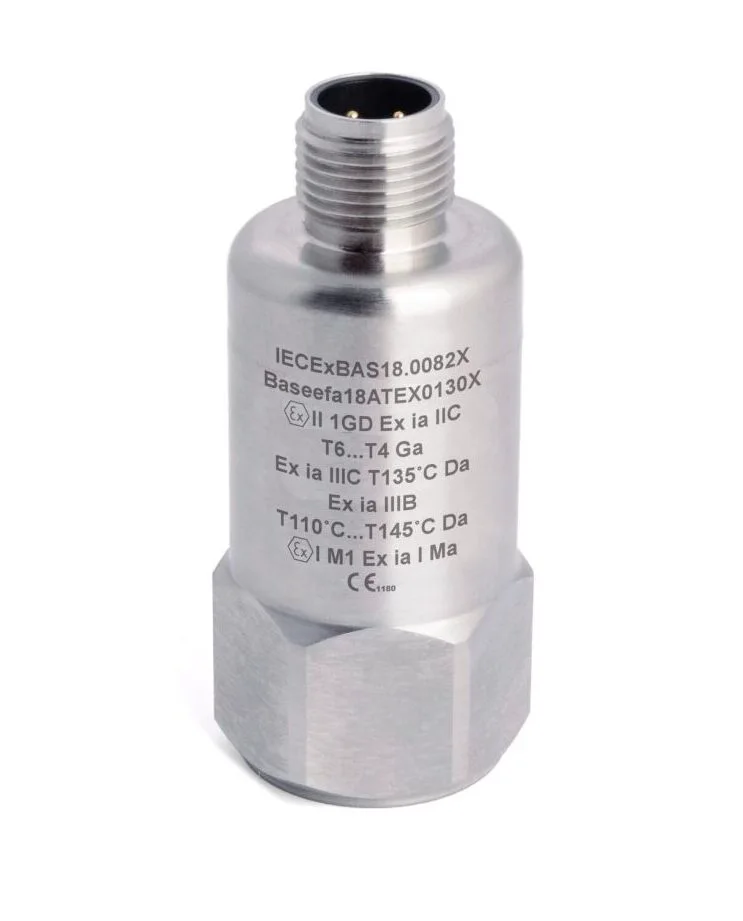
HS-150I Intrinsically safe accelerometer, top exit, M12 connector
- AC IEPE
- 10 … 500 mV/g
- Top exit
- IP67
PDF datasheet
Exclusive Hansford Sensors distributor for Poland, the Czech Republic and Slovakia
Oil and gas installations operate continuously, often in hazardous areas and far from maintenance facilities. Vibration monitoring of pumps, compressors and drives makes it possible to detect developing damage before it forces a shutdown of the installation.
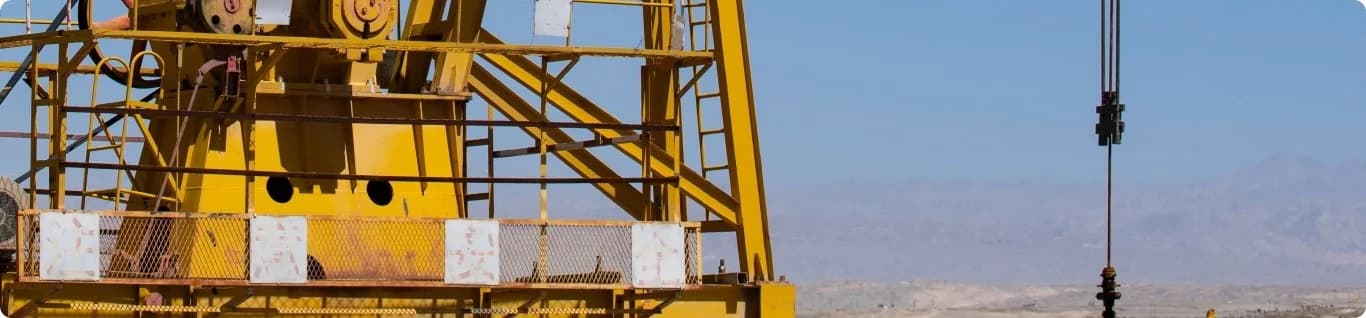
An unplanned shutdown of a process installation has consequences beyond lost production: it requires safe shutdown and restart procedures, and a failure of a rotating machine can lead to seal damage and leakage of the process medium. Elevated vibration shortens the life of pump mechanical seals, so vibration monitoring supports reliability as well as process safety and environmental protection.
Much of the equipment operates in hazardous areas with explosive gas atmospheres. An intrinsically safe sensor is only one element of the measurement chain: it requires a barrier or isolator in the safe area, a cable with known parameters and circuit documentation, and its marking must match the zone, gas group and temperature class.
Add to this the environmental conditions — outdoor operation, corrosive atmospheres, salt mist at offshore sites, high temperatures — and widely dispersed sites. Compressor stations, pump stations and field installations often operate unattended, so the signal has to reach the DCS or SCADA remotely.
01Machines in this industry
Process, pipeline and injection pumps, compressors, motors and drives and others — measuring point on the bearing housing.
02Sensor
An IEPE accelerometer or a 4–20 mA sensor converts vibration (and often temperature) into an electrical signal.
Industrial IEPE accelerometers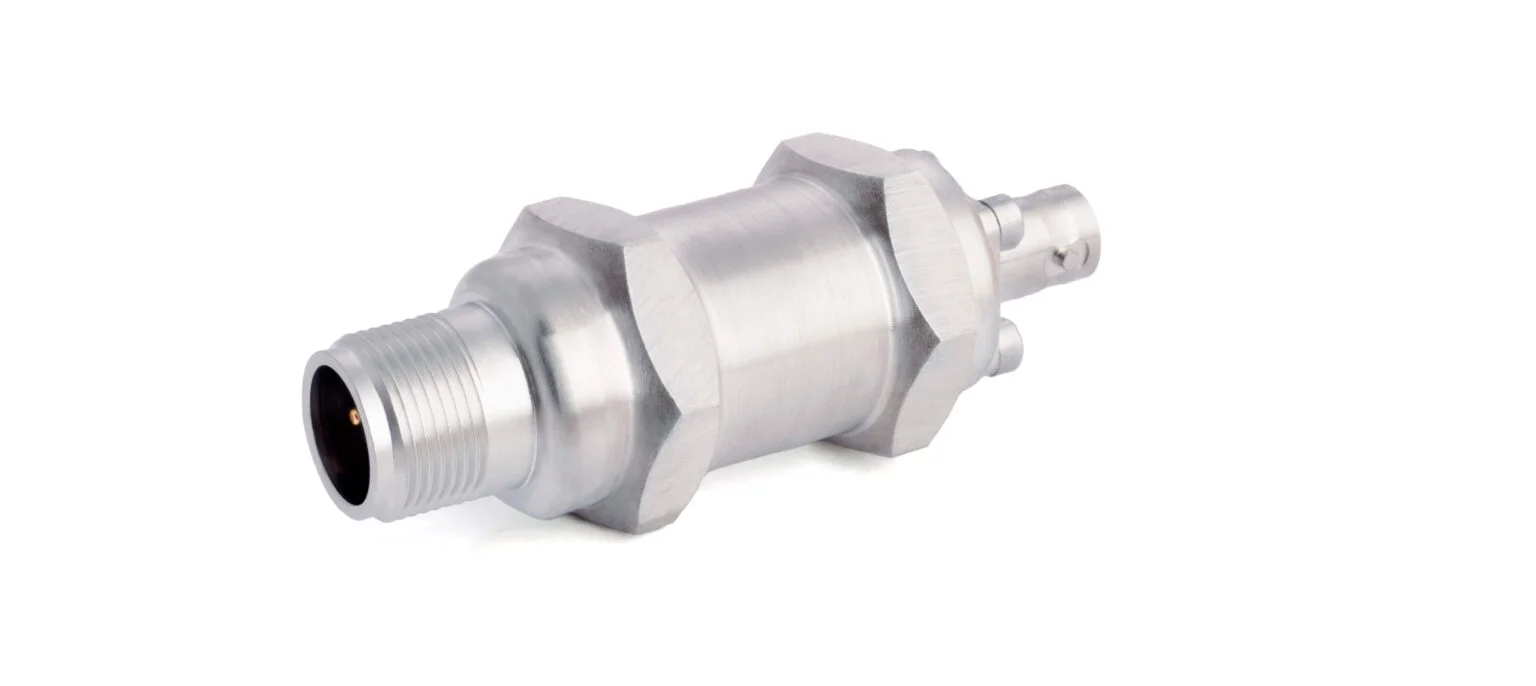
03Signal
A cable with the right connector and a junction box carry the signal from many measuring points to the system.
Cables and connectors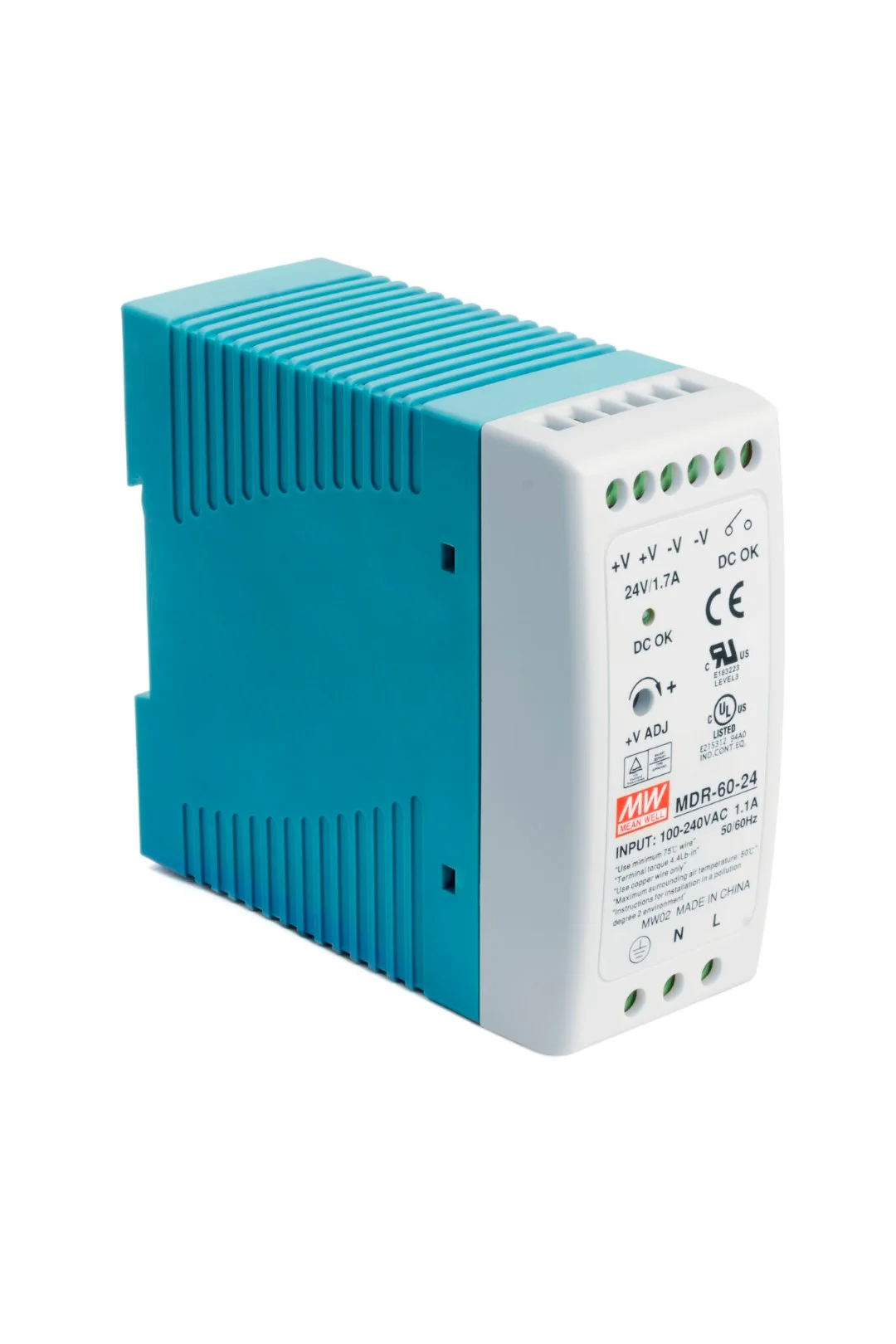
04Monitoring
PLC, DCS, an online system or a data collector: trends, alarm thresholds and diagnostics before a failure happens.
Vibration systems and switchesThe intrinsically safe HS-100I and HS-150I accelerometers, of shear design and with ATEX and IECEx certification, are intended for measurements in Ex zones — see accelerometers for hazardous areas. The documentation for these sensors includes, among other things, a guide to safety barriers and maximum cable length, which helps in designing the measurement chain.
HS-420, with a 4–20 mA output proportional to vibration velocity, integrates directly with PLC, DCS and SCADA systems. In non-hazardous areas the standard version is sufficient, and for Ex zones intrinsically safe 4–20 mA transmitters are available.
Triaxial accelerometers measure vibration in three directions simultaneously from a single mounting point. They are useful where there is little space for sensors and the analysis requires all directions and the phase relationships between them.
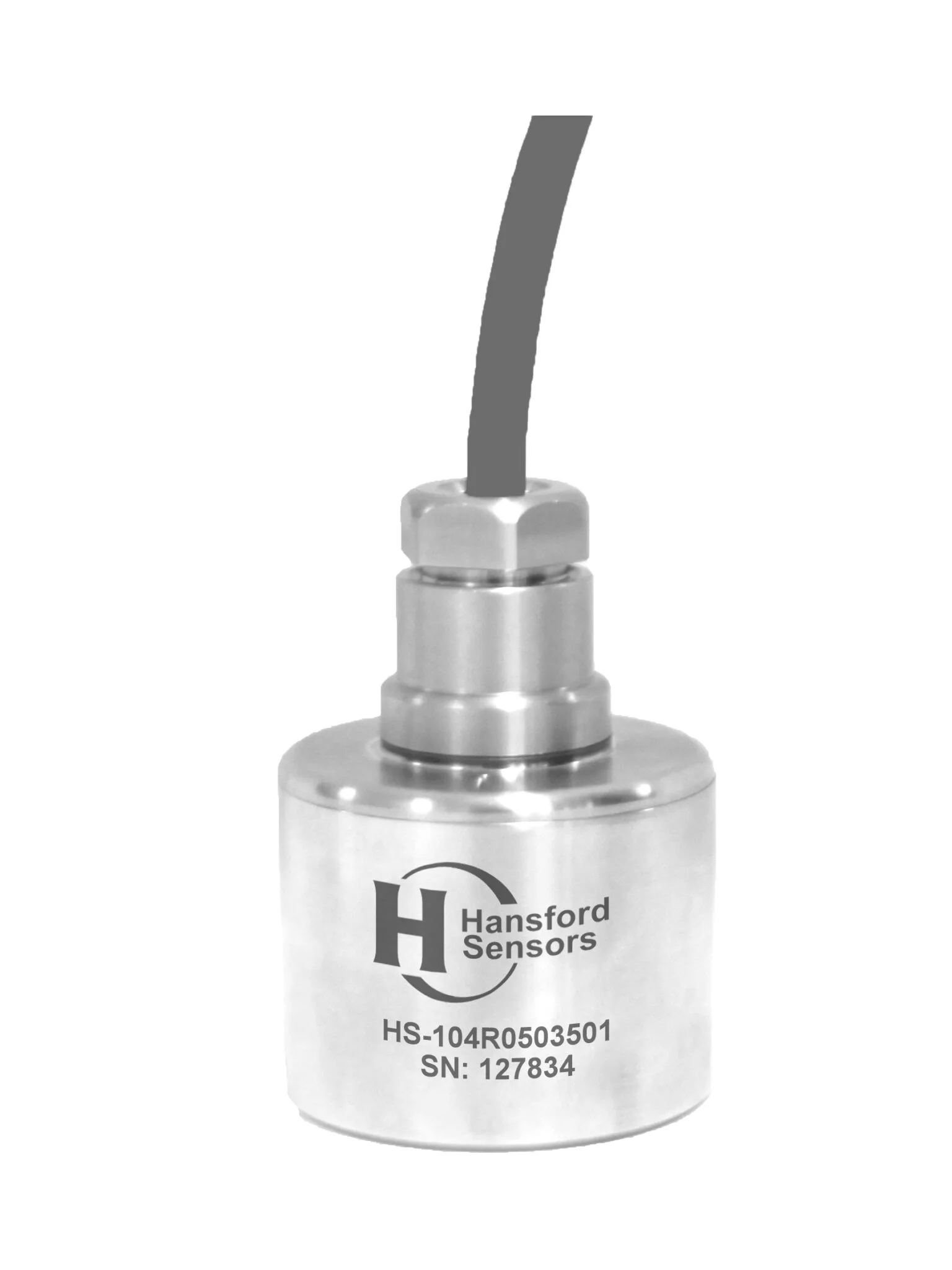
For underwater applications, the manufacturer offers HS-150 accelerometers in versions with an integral cable. The permissible submersion conditions are given in the datasheet, and it is worth discussing the selection before placing an order.
Measurement circuits from multiple sensors can be brought together in stainless steel intrinsically safe connection boxes, including a version with safety barriers.
PDF datasheet
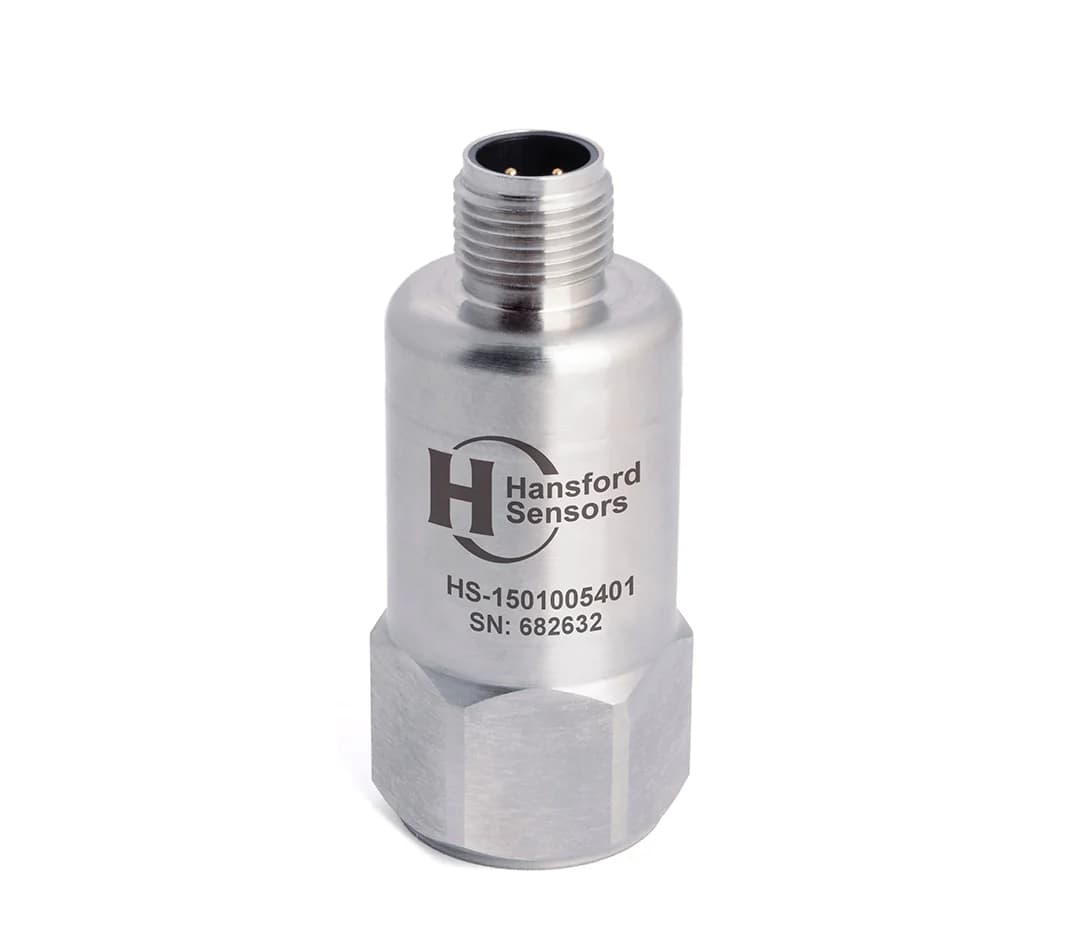
Intrinsically safe Premium accelerometer (shear design).
PDF datasheet
Premium accelerometer for underwater applications (integral cable versions).
PDF datasheet
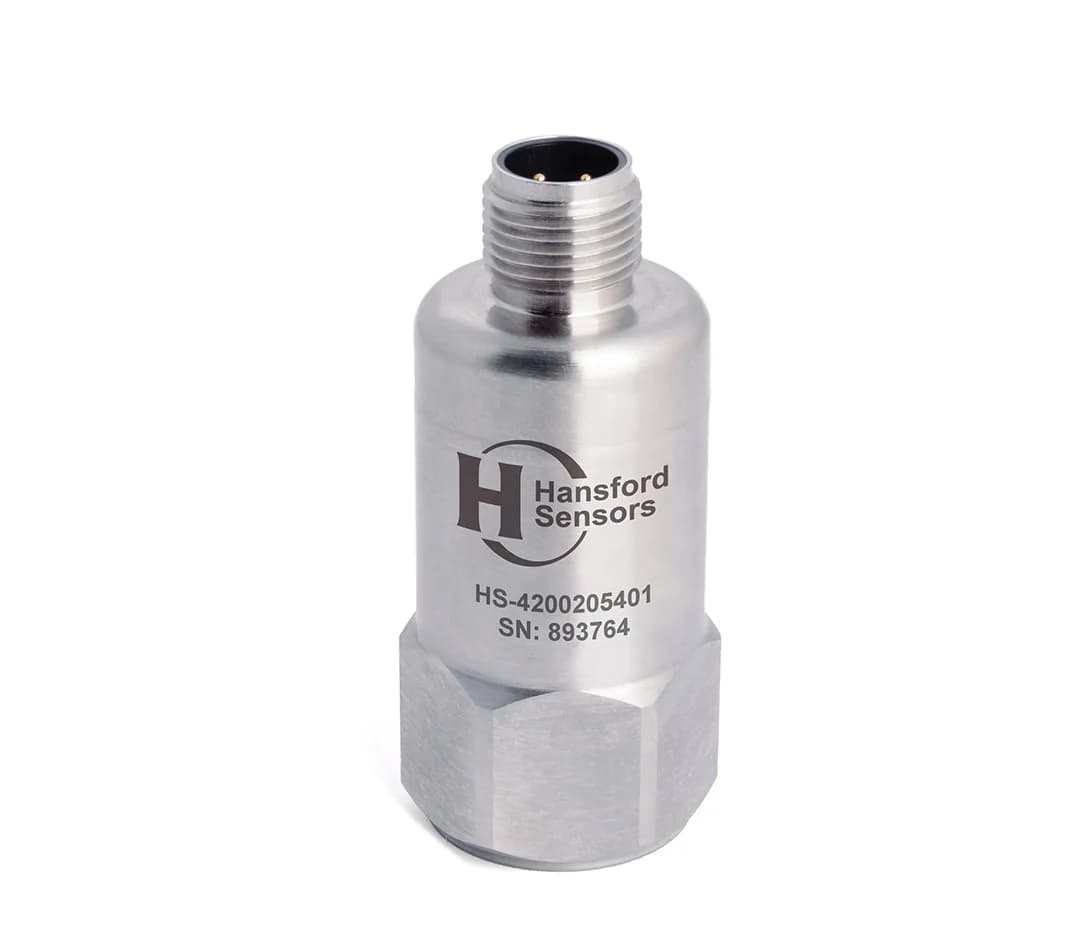
Intrinsically safe accelerometer for hazardous areas.
PDF datasheet
4–20 mA for PLC, DCS and SCADA systems.
No. Intrinsic safety applies to the whole circuit: the sensor, the cable, and the barrier or isolator in the safe area. Their parameters — voltage, current, power, capacitance and inductance — must be compatible with each other. The circuit is selected and documented according to the rules for designing installations in hazardous areas, e.g. to EN 60079-14.
When there is not enough space at the measuring point for several sensors, or when you need simultaneous measurement in three directions and phase comparison. A triaxial sensor reduces the number of mounting points, but it requires three channels in the system and a multi-core cable. In Ex zones, check that the selected triaxial version has the required marking.
On machines with plain bearings, no. There, protection is based on measuring shaft vibration with proximity probes, and accelerometers on the casing complement it, e.g. with diagnostics of gearboxes and of the rolling-element bearings of auxiliary drives. On machines with rolling-element bearings, however, the accelerometer is the primary diagnostic sensor.
Send us the zone, gas group, temperature class and a description of the measurement chain: barrier, cable length and target system. We will help you select sensors and accessories.