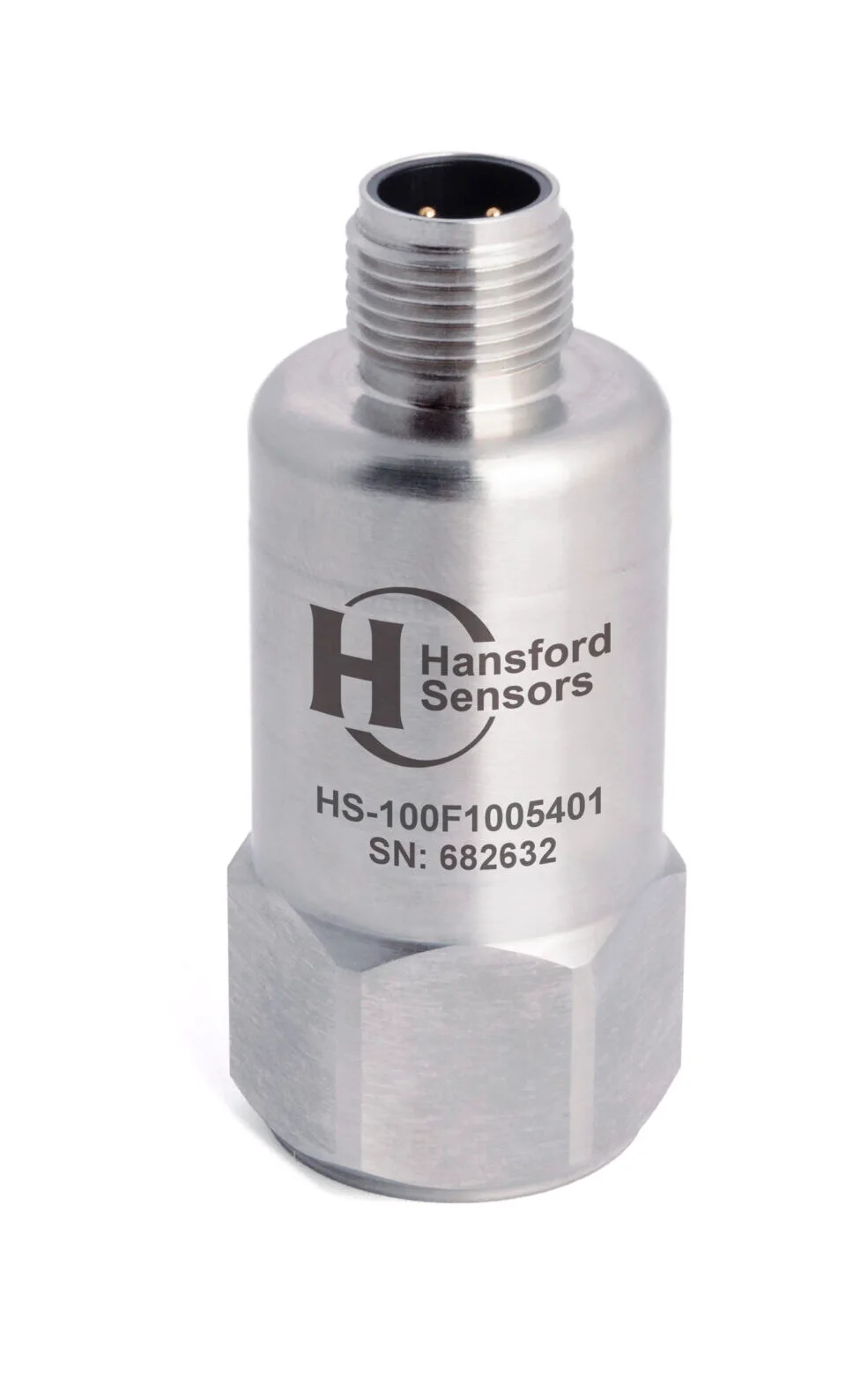
HS-100F Accelerometer with filter, top exit, M12 connector
- AC IEPE
- 10 … 500 mV/g
- Top exit
- IP67
PDF datasheet
Exclusive Hansford Sensors distributor for Poland, the Czech Republic and Slovakia
In a food and beverage plant, unplanned downtime means not only lost production but also raw material to be disposed of and additional cleaning of the line. Vibration sensors on motors, pumps, mixers and conveyors help detect faults before they disrupt the production schedule.

Food and beverage lines run to tight schedules, often over several shifts and with frequent changeovers. A pump or gearbox failure during a batch can mean the loss of a product with a short shelf life, repeated cleaning and disinfection of the installation, and rescheduling of the orders that follow. That is why repairs are scheduled into windows in the production plan, and machine condition data helps decide what really needs intervention.
In production areas, sensors are regularly washed down with pressurised water and cleaning agents, and they work in high humidity and with large temperature changes — from cold rooms and freezers to ovens, pasteurisers and dryers. The housing and cable must withstand these conditions, and the mounting method must not create places where water and dirt collect.
There are many machines, and most of them are standard motors, pumps and conveyors. A practical approach is therefore to combine simple, continuous monitoring in the PLC with periodic diagnostic measurements taken from reading points outside the hygiene zone.
01Machines in this industry
Drive motors on production and packaging lines, process, transfer and CIP pumps, fans and blowers for cooling, drying and ventilation and others — measuring point on the bearing housing.
02Sensor
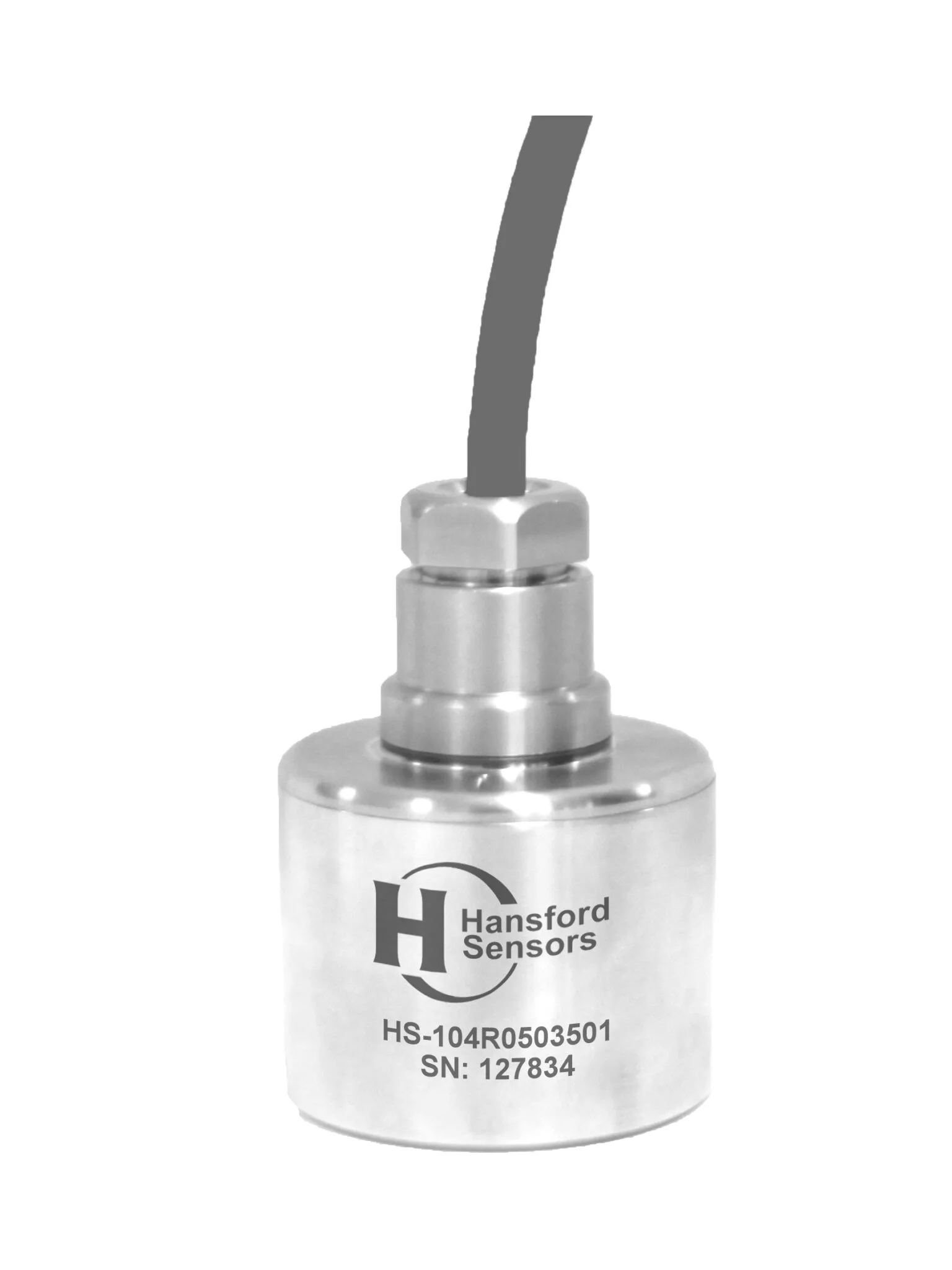
An IEPE accelerometer or a 4–20 mA sensor converts vibration (and often temperature) into an electrical signal.
Industrial IEPE accelerometers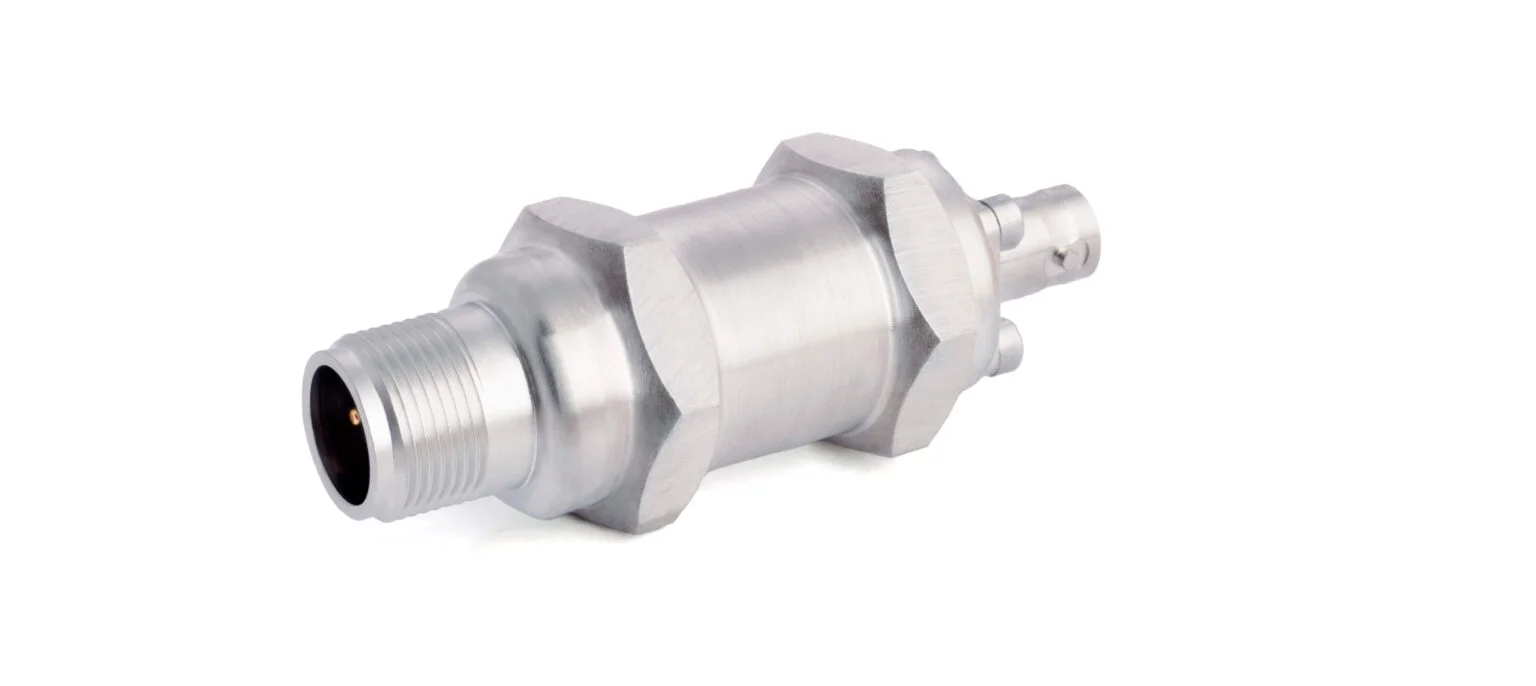
03Signal
A cable with the right connector and a junction box carry the signal from many measuring points to the system.
Cables and connectors
04Monitoring
PLC, DCS, an online system or a data collector: trends, alarm thresholds and diagnostics before a failure happens.
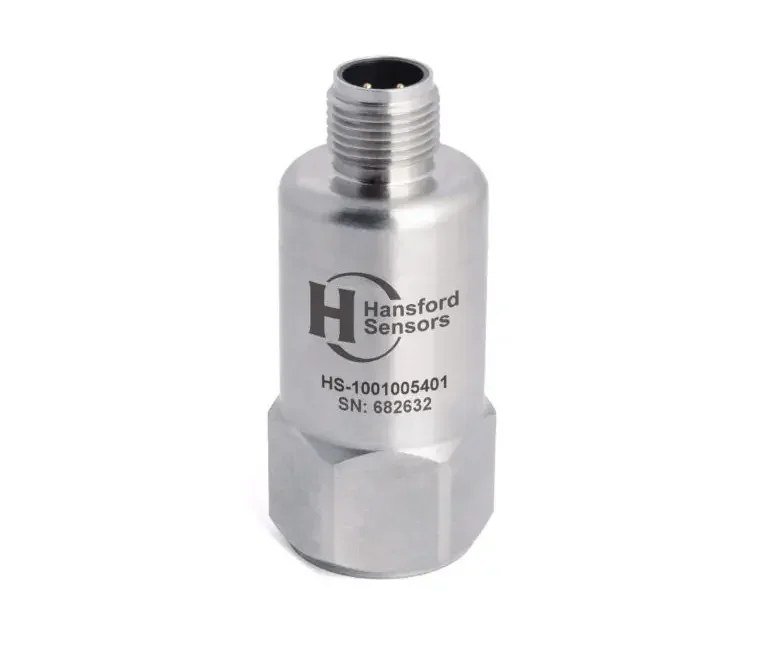
Vibration systems and switchesThe HS-100 accelerometer, with a standard sensitivity of 100 mV/g and connected to an online monitoring system, allows continuous monitoring of the main bearings and provides data for full frequency analysis. Where it is enough to track the overall vibration level, the HS-420 sends a 4–20 mA signal proportional to vibration velocity directly to a PLC, SCADA or BMS — an economical way to monitor faults that develop gradually, such as misalignment. See 4–20 mA vibration sensors.
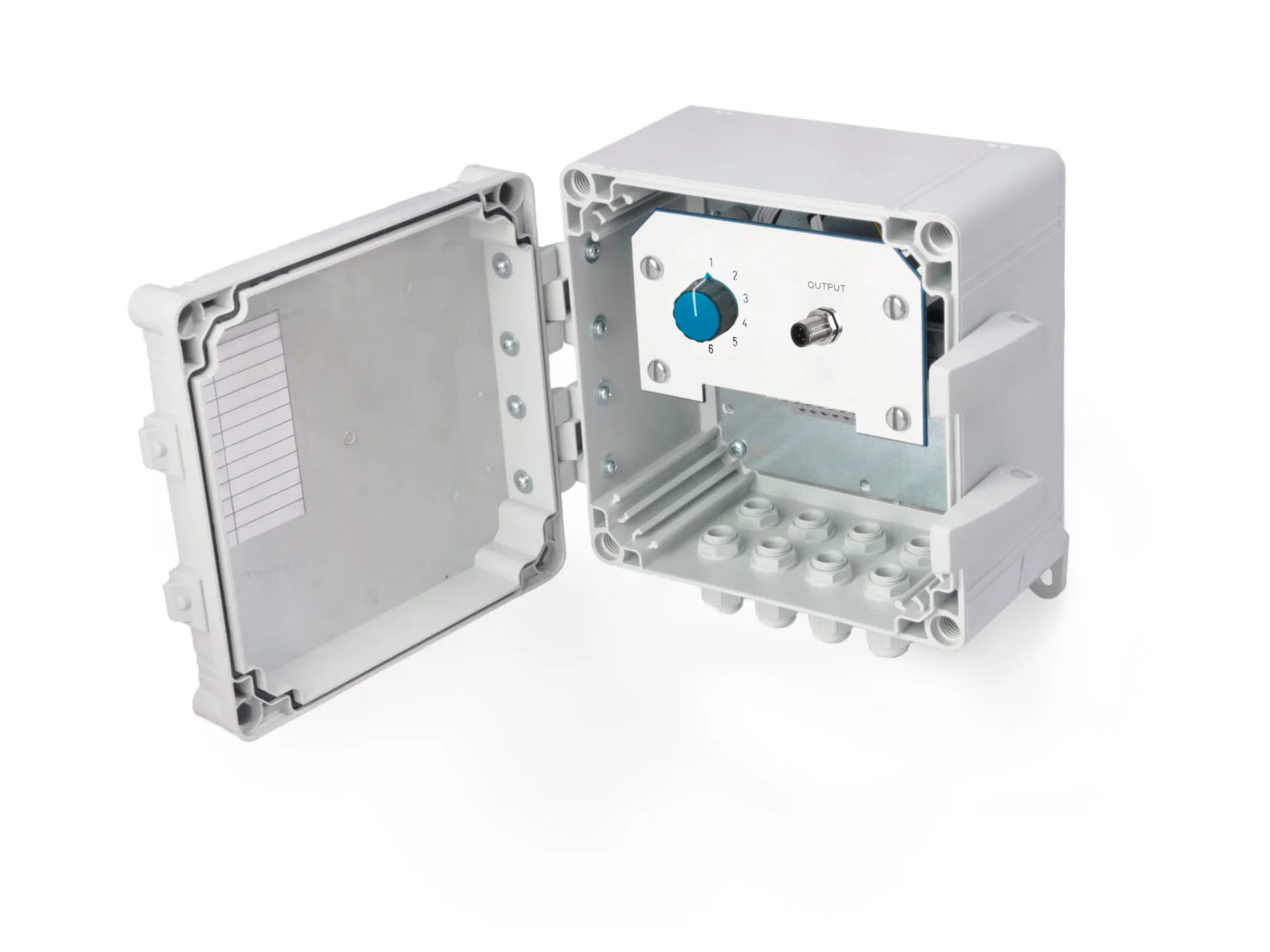
Permanently mounted sensors can be cabled to HS-SE switch boxes located in a safe, dry place. Measurements with a data collector are then taken without going onto the line or bringing instruments into the hygiene zone, and the data always comes from the same points.
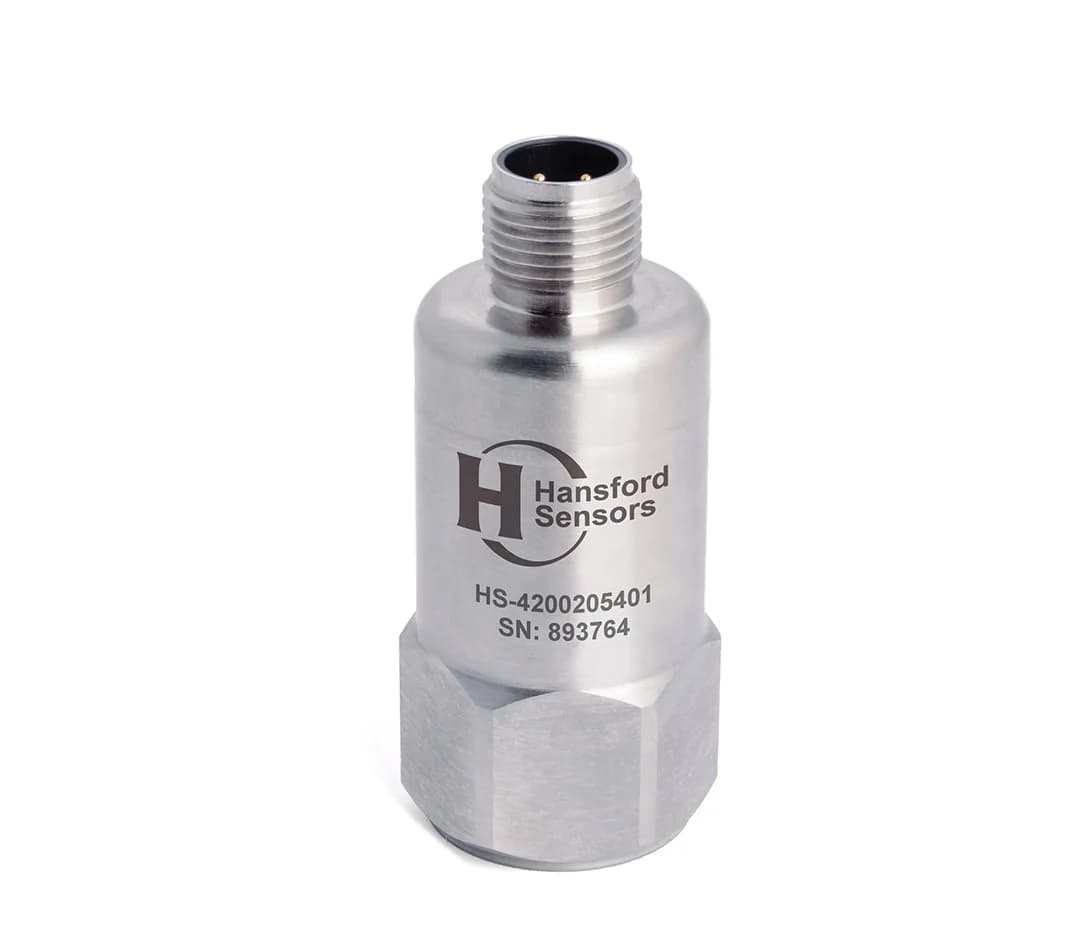
Conveyors in bottling and canning plants, as well as mixers, rotate slowly, so fault signals have low frequencies. For such machines, the manufacturer offers HS-100 accelerometers with higher sensitivity or the HS-100F version with a filter, designed for slow-speed machines — see industrial accelerometers.
Choose stainless steel sensors with an integral cable; check the IP rating and cable material in the datasheet against the cleaning agents used.
Route the cable so that water drains away from the sensor, and avoid places where it collects.
In wet areas, make connections in stainless steel HS-JE junction boxes.
On motors with cooling fins, where a thread cannot be made in the housing, fin mounting pads or adhesive mounting pads from the sensor mounting hardware category can help.
PDF datasheet
Filtered version for low-speed machines (mixers, agitators).
PDF datasheet
Switch box for periodic measurements with a data collector.
PDF datasheet
Continuous 4–20 mA monitoring directly in the PLC.
PDF datasheet
Sealed accelerometer for motors, pumps and conveyors on production lines.
It depends on the version: the deciding factors are the IP rating, the cable material and the way the cable exits the sensor. In washdown areas, versions with an integral cable work better than those with a connector, and resistance to the cleaning agents used should be confirmed in the datasheet. Installation also matters — a cable secured so that water runs away from the sensor is less exposed to moisture.
At low rotational speeds, bearing fault signals are weak and low in frequency, so it is worth using an accelerometer with a higher sensitivity or the filtered version, HS-100F. Mount the sensors on the bearing housings of the drive and return shafts, and take measurements at a constant conveyor speed. Here, a long-term trend is more valuable than a single reading.
For machines on which faults develop gradually, such as misalignment or increasing unbalance, the overall vibration velocity level from the HS-420 in the PLC gives a useful trend and alarms. However, the transmitter will not show the cause of increased vibration — that requires analysis of the AC signal. On critical machines, it is therefore worth combining both types of measurement.
Describe the machines, the washdown conditions and the system the signal should go to: PLC, SCADA or data collector. We will help you select sensors and accessories for the wet area.