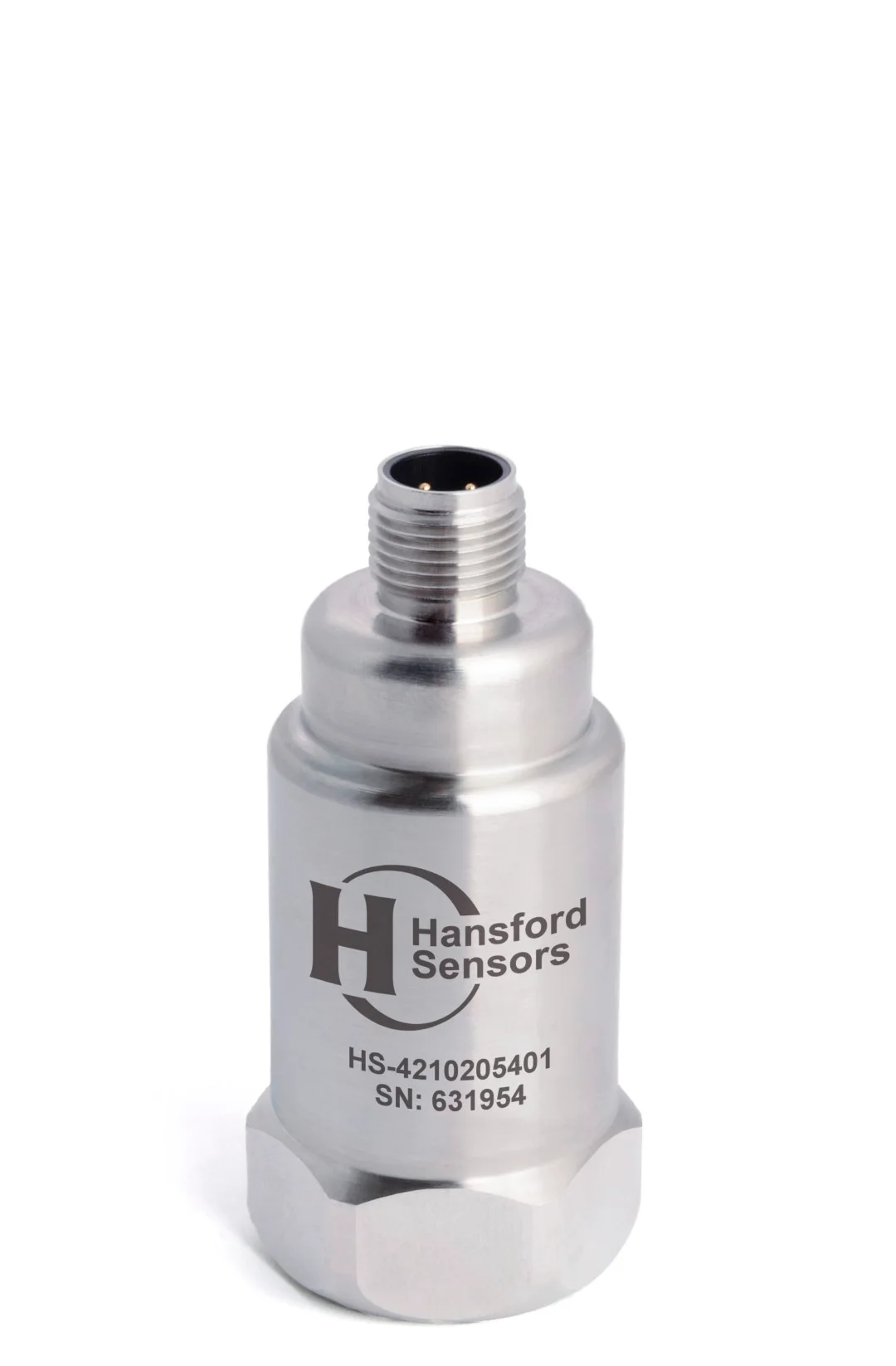
HS-421 4–20 mA vibration sensor (velocity) with additional AC output, top exit, M12 connector
- AC IEPE + 4–20 mA
- Top exit
- IP67
- M12
PDF datasheet
Exclusive Hansford Sensors distributor for Poland, the Czech Republic and Slovakia
In pharmaceutical production, a machine failure can mean a lost batch, a deviation from the validated process and additional documentation. Vibration monitoring of air handling units, utility equipment and process machines helps maintain production continuity and plan maintenance work within agreed service windows.

Every unplanned interruption to a process operated to validated parameters requires investigation, an assessment of the impact on quality and often a decision on what happens to the batch. Planned work can be prepared in advance together with the quality and production departments; a breakdown cannot. Knowing the condition of machines therefore helps not only to avoid downtime but also to organise maintenance work.
Cleanrooms depend on air handling units, which maintain the airflow and the pressure cascade. A damaged fan bearing can stop production in an entire zone, as can the failure of a pump in the purified water loop, an air compressor or a chiller. This equipment runs continuously, often in plant rooms and on roofs, where staff rarely go.
On qualified equipment, sensors are installed under the change control procedure, and in clean areas it is important to use materials that withstand frequent cleaning and disinfection. Where solvents are used, there may be hazardous areas.
01Machines in this industry
Air handling units (AHU), purified water, dosing and circulation pumps, process drive motors and others — measuring point on the bearing housing.
02Sensor
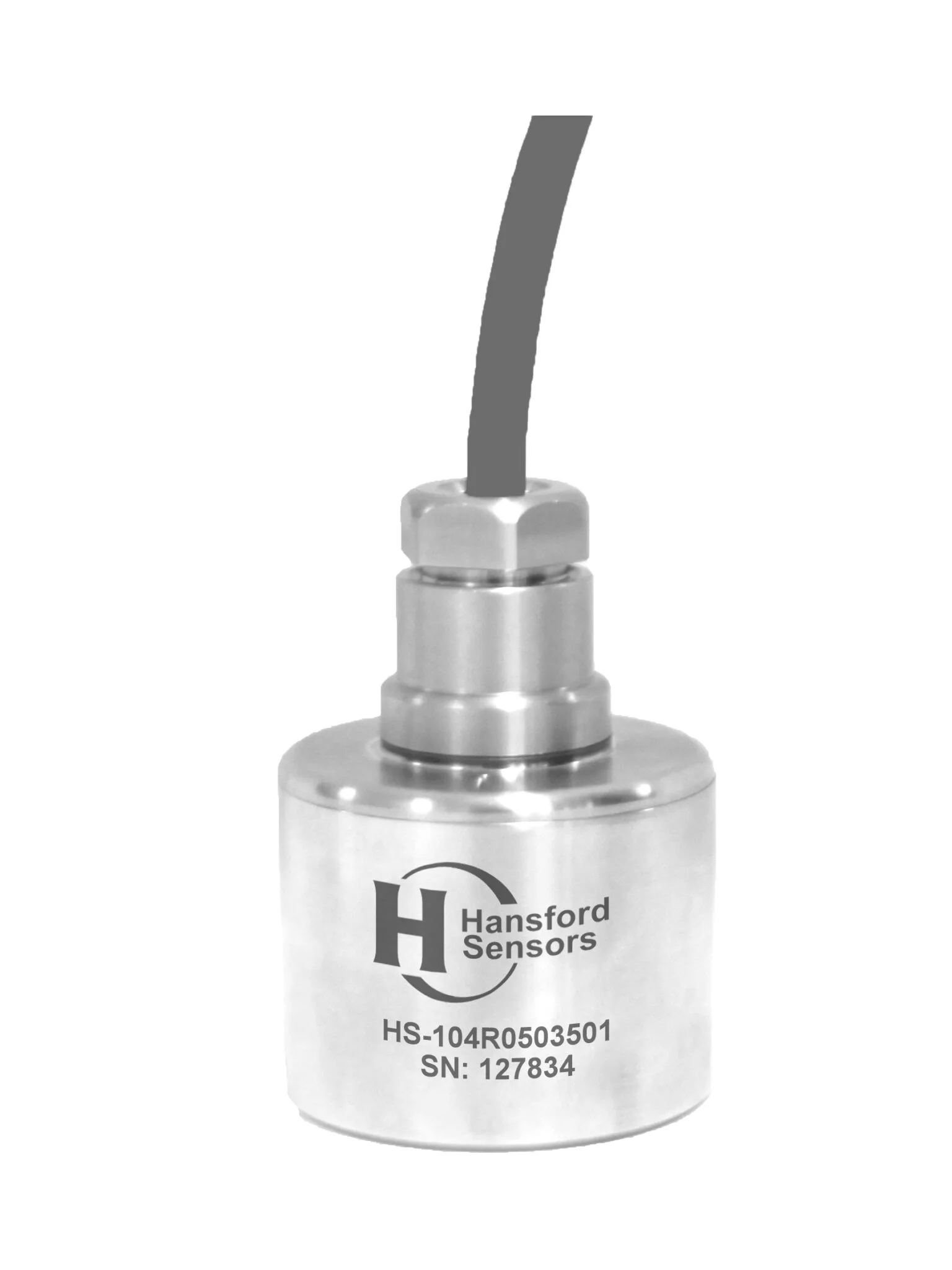
An IEPE accelerometer or a 4–20 mA sensor converts vibration (and often temperature) into an electrical signal.
Industrial IEPE accelerometers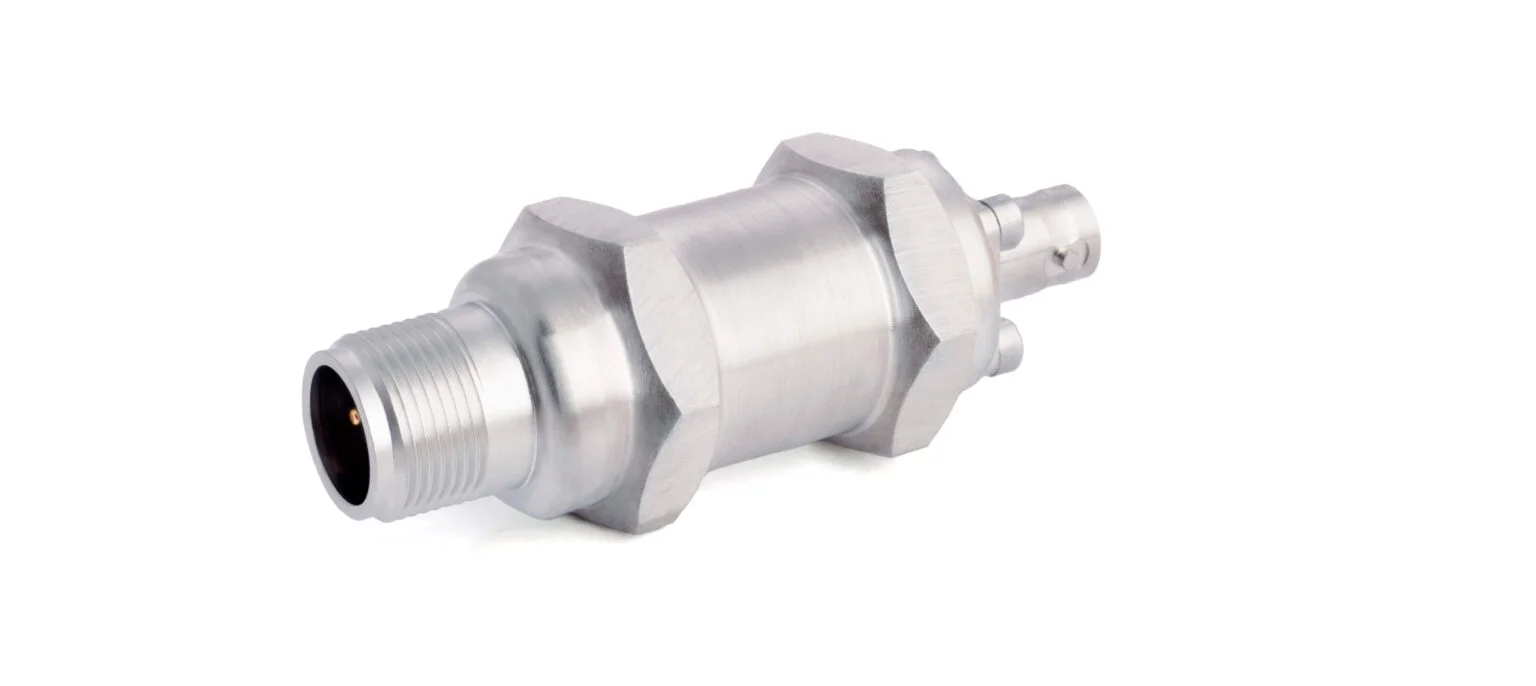
03Signal
A cable with the right connector and a junction box carry the signal from many measuring points to the system.
Cables and connectors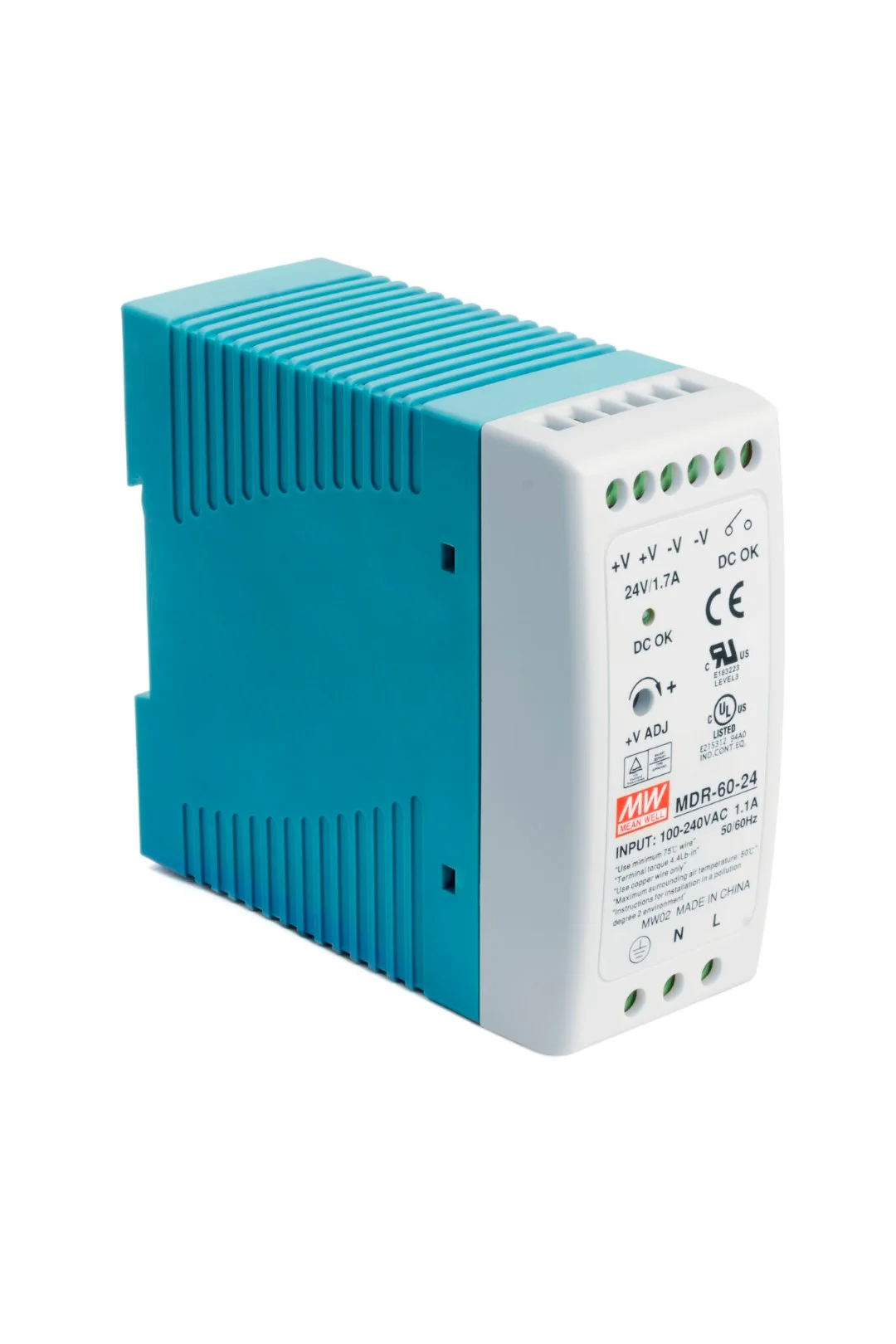
04Monitoring
PLC, DCS, an online system or a data collector: trends, alarm thresholds and diagnostics before a failure happens.
Vibration systems and switchesA simple and economical way to monitor air handling units is to use HS-420 transmitters mounted near the fan and motor bearings. The 4–20 mA signal, proportional to vibration velocity, goes to the BMS or PLC, where the trend of the overall vibration level is available remotely and an alarm is raised when a threshold is exceeded. This approach mainly covers unbalance and misalignment — see 4–20 mA vibration sensors.
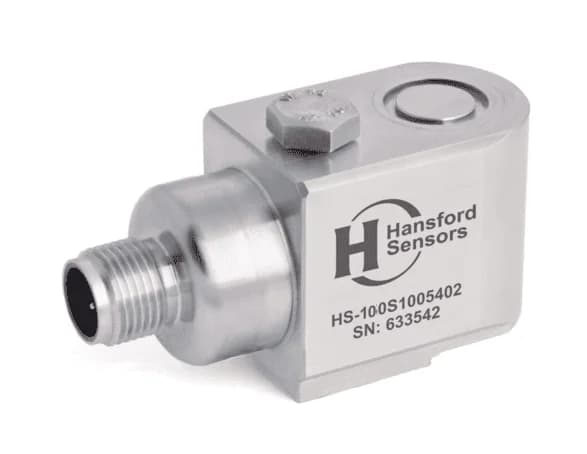
HS-421 combines a 4–20 mA output (vibration velocity) with an AC output (acceleration). The control system receives a continuous trend, and a maintenance engineer can connect a data collector at the same point and carry out detailed analysis: detect bearing damage and mechanical looseness, and confirm the cause of unbalance or misalignment. See 4–20 mA transmitters with AC output.
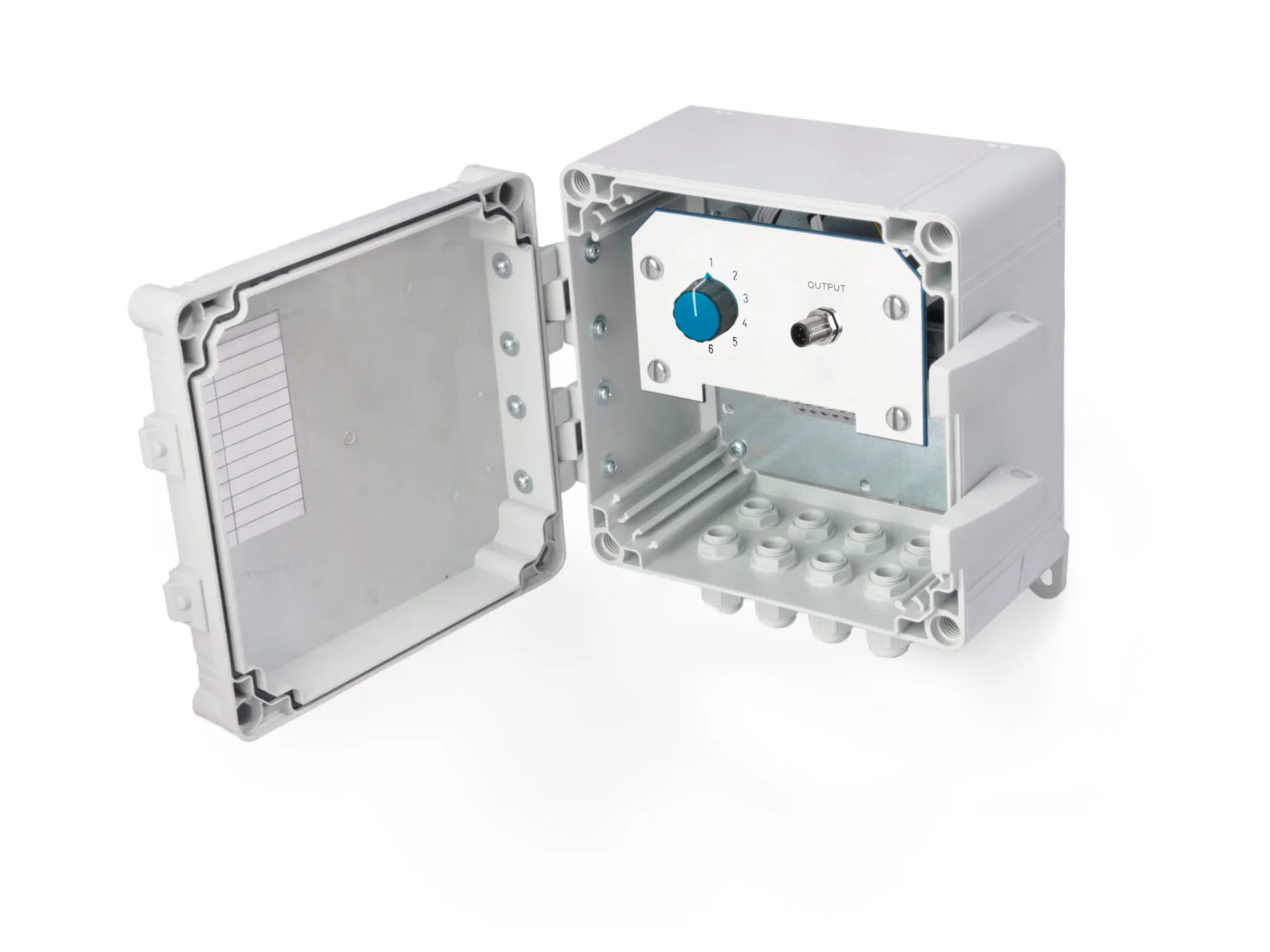
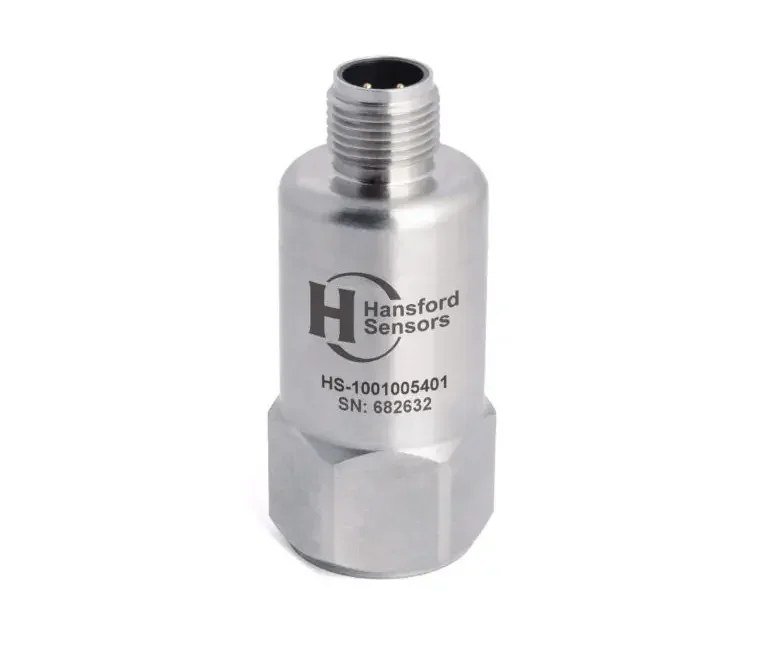
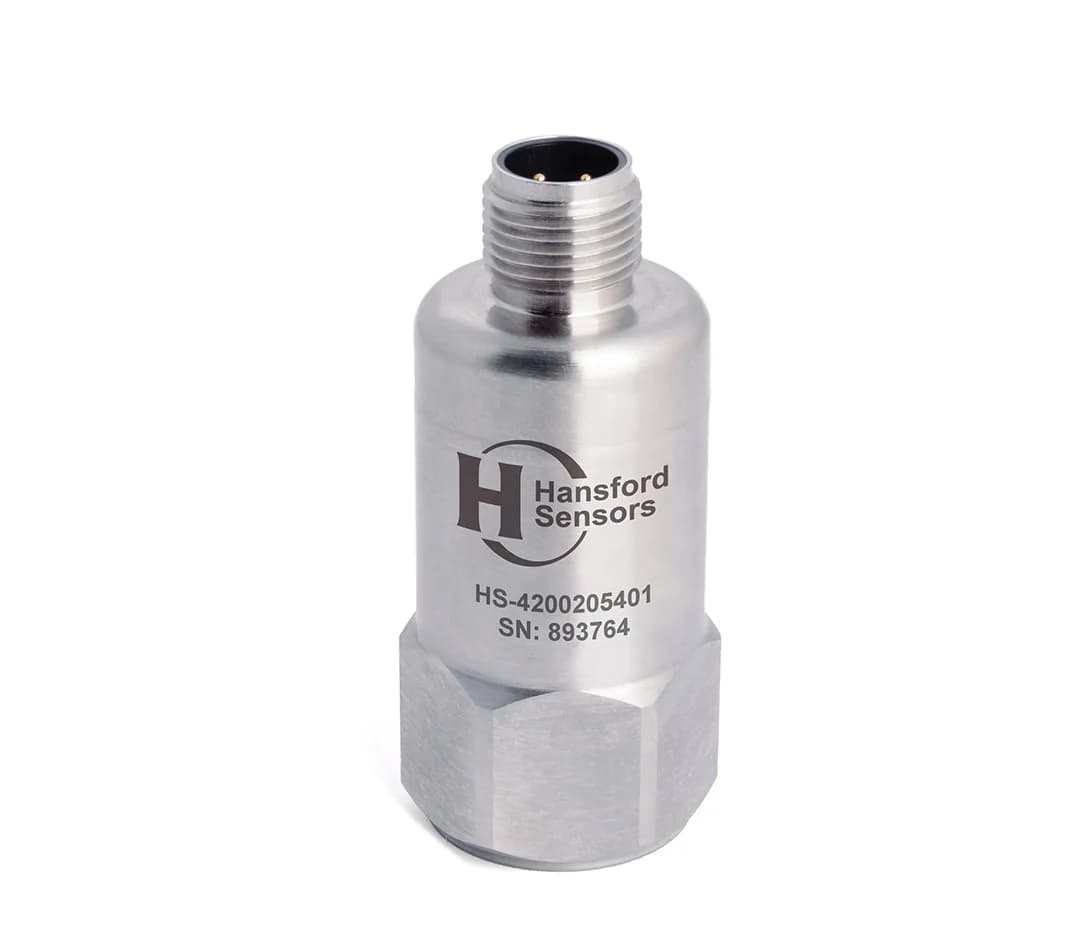
Permanently mounted HS-100 accelerometers connected to HS-SE switch boxes in an accessible, safe place — for example, a technical corridor — allow data to be collected regularly from the same points without entering the cleanrooms. Where access is limited, the side-exit HS-100S version works well.
If the explosion protection document defines Ex zones, for example in areas where solvents are handled, intrinsically safe versions are needed — see accelerometers for hazardous areas. You will find the certificates and Ex marking of each version in its documentation.
PDF datasheet
Dual output: 4–20 mA for the PLC and an AC signal for analysis.
PDF datasheet
Side exit where access is limited.
PDF datasheet
Switch box — a readout point for the data collector.
PDF datasheet
Accelerometer for long-term trend analysis.
PDF datasheet
4–20 mA for air handling units (AHU) and BMS.
The range should cover the normal vibration level with a margin for the warning and alarm thresholds, but it must not be too wide, as this reduces the resolution of the reading. The range is chosen when ordering, from the options given in the datasheet. Alarm thresholds can be based on vibration evaluation criteria for fans, e.g. from ISO 14694, and on measurements taken after commissioning.
The HS-421 sends a continuous 4–20 mA signal proportional to vibration velocity to the PLC or BMS, and at the same time provides an AC acceleration signal for analysis with a data collector. One sensor at one point therefore serves both for continuous monitoring and for diagnosing bearing faults and looseness. This simplifies the installation and the documentation of changes to the equipment.
Usually, yes, because the sensor is mounted near the bearings in the fan section, which can only be accessed safely once the unit is switched off. It is worth combining the work with a planned inspection of the air handling unit. If a tapped hole cannot be made, use an adhesive mounting pad, which does not require machining of the housing.
Send us a list of the air handling units and machines you want to monitor, together with information about your BMS or PLC. We will help you select sensors and compile their technical documentation.