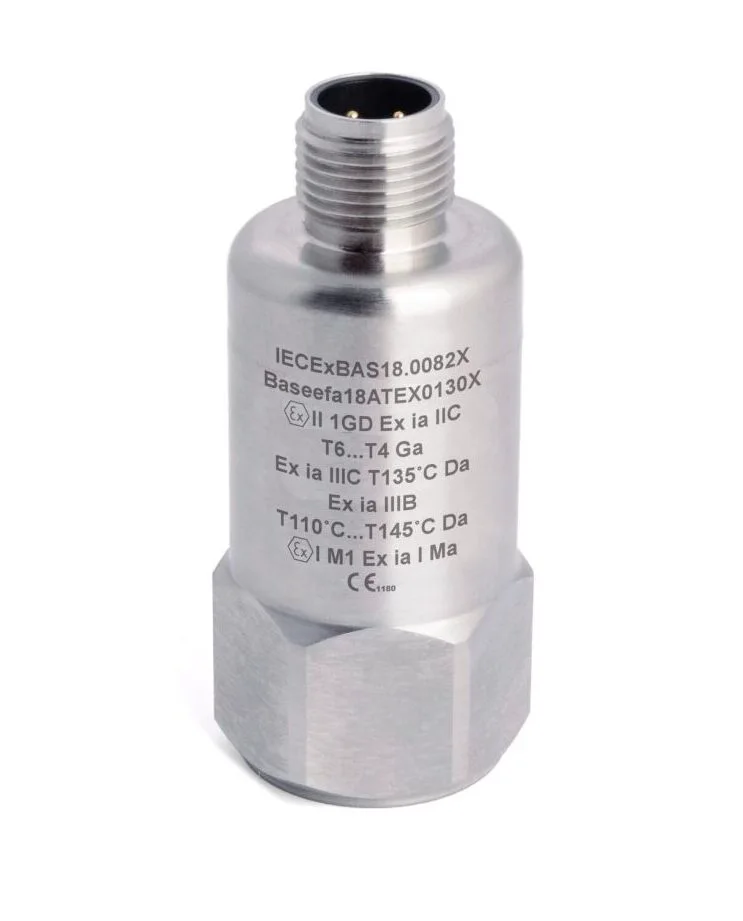
HS-100I Intrinsically safe accelerometer, top exit, M12 connector
- AC IEPE
- 10 … 100 mV/g
- Top exit
- IP67
PDF datasheet
Exclusive Hansford Sensors distributor for Poland, the Czech Republic and Slovakia
A cement plant is a process line in which a failure of a crusher, mill, bucket elevator or fan can quickly restrict kiln operation. Vibration sensors on the key drive units make it possible to plan repairs based on machine condition, rather than only after a failure.

The rotary kiln sets the pace of the whole plant. An unplanned kiln stop means cooling down and reheating, lost clinker production and additional thermal stress on the refractory lining. That is why it is so important to detect faults in machines that work with the kiln — mills, process fans, conveyors and feeders — in advance and to repair them during a planned shutdown.
Operating conditions for sensors are among the toughest in industry: fine, abrasive dust settles on housings and gets into connectors, temperatures are high at the kiln and clinker cooler, and crushers and mills generate strong shocks. Many installations are outdoors, where temperature changes and moisture condensation also occur.
Installations for grinding and feeding coal and alternative fuels may have designated dust hazardous areas. A sensor installed in such an area must have a suitable explosion-protected design — for vibration sensors, most often intrinsically safe — and its marking must match the zone and dust group specified in the explosion protection document.
01Machines in this industry
Rotary kiln drive (motor, gearbox, pinion), kiln support rollers, crushers and screens and others — measuring point on the bearing housing.
02Sensor
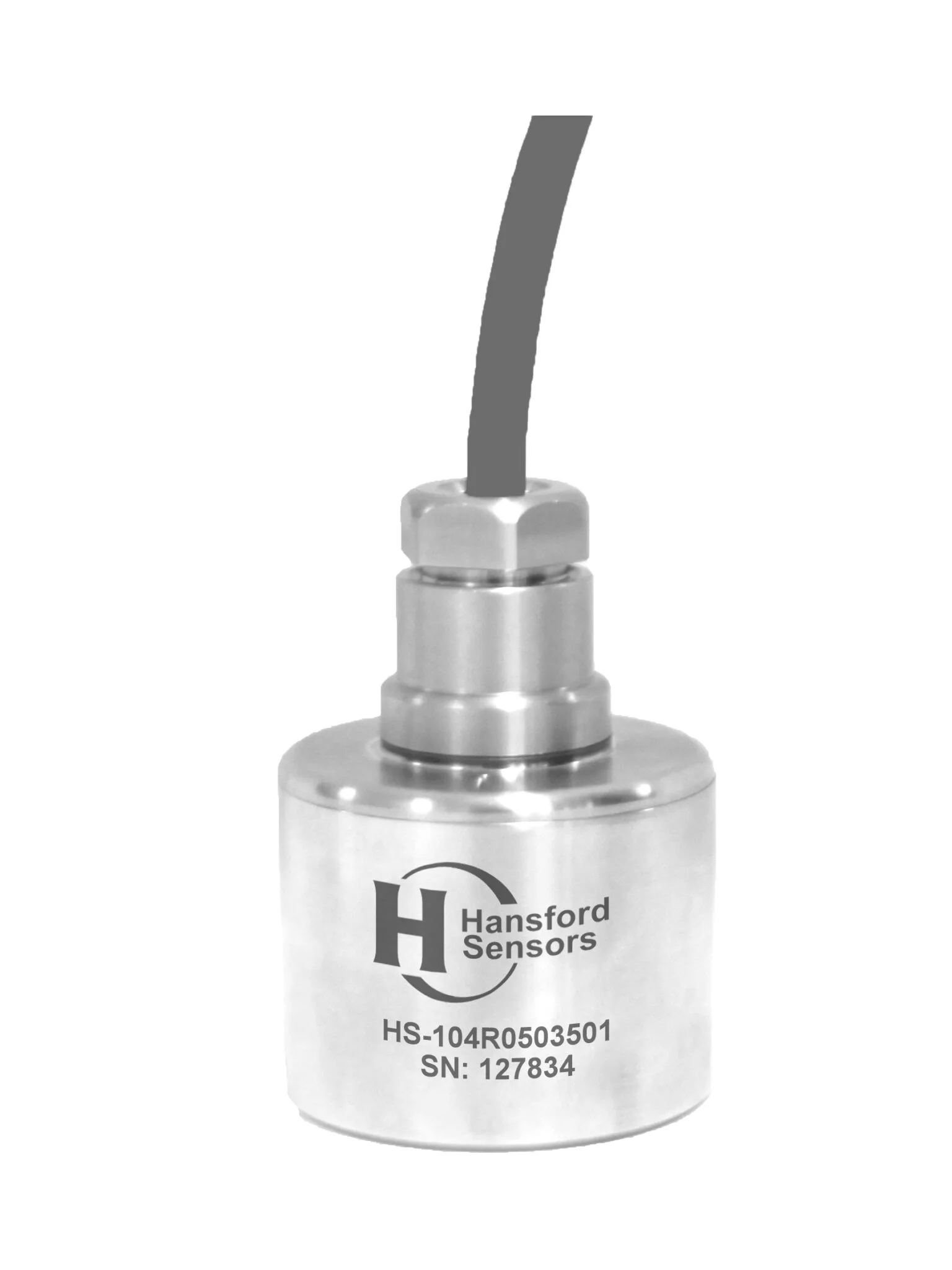
An IEPE accelerometer or a 4–20 mA sensor converts vibration (and often temperature) into an electrical signal.
Industrial IEPE accelerometers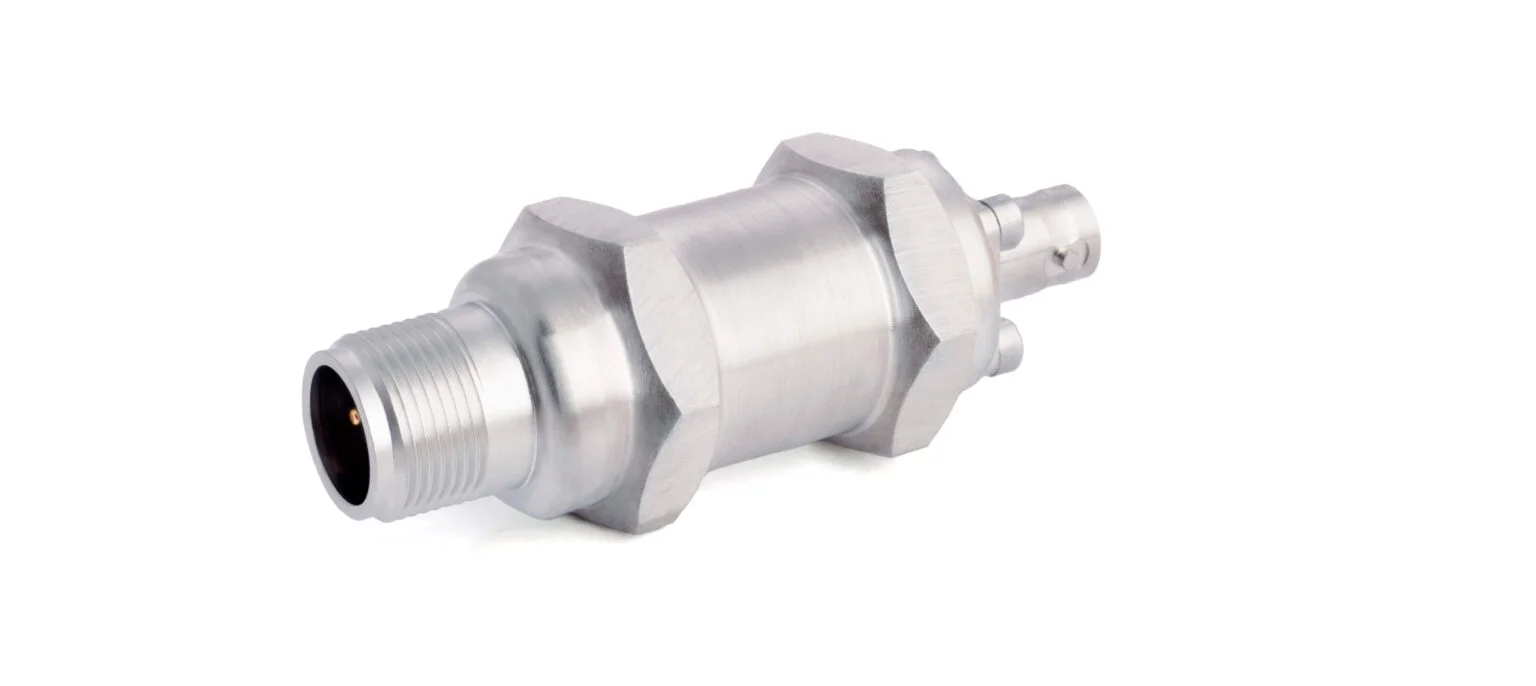
03Signal
A cable with the right connector and a junction box carry the signal from many measuring points to the system.
Cables and connectors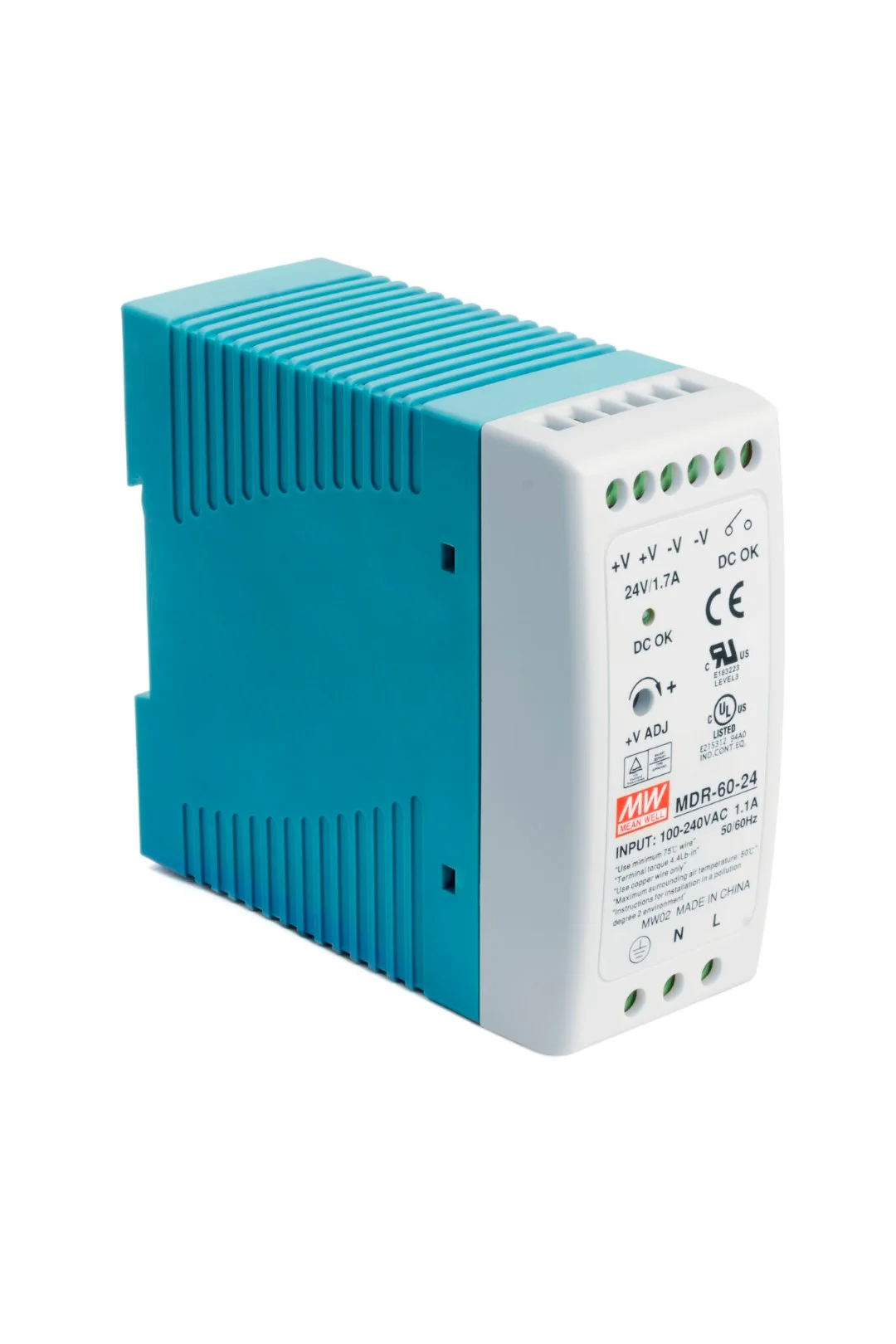
04Monitoring
PLC, DCS, an online system or a data collector: trends, alarm thresholds and diagnostics before a failure happens.
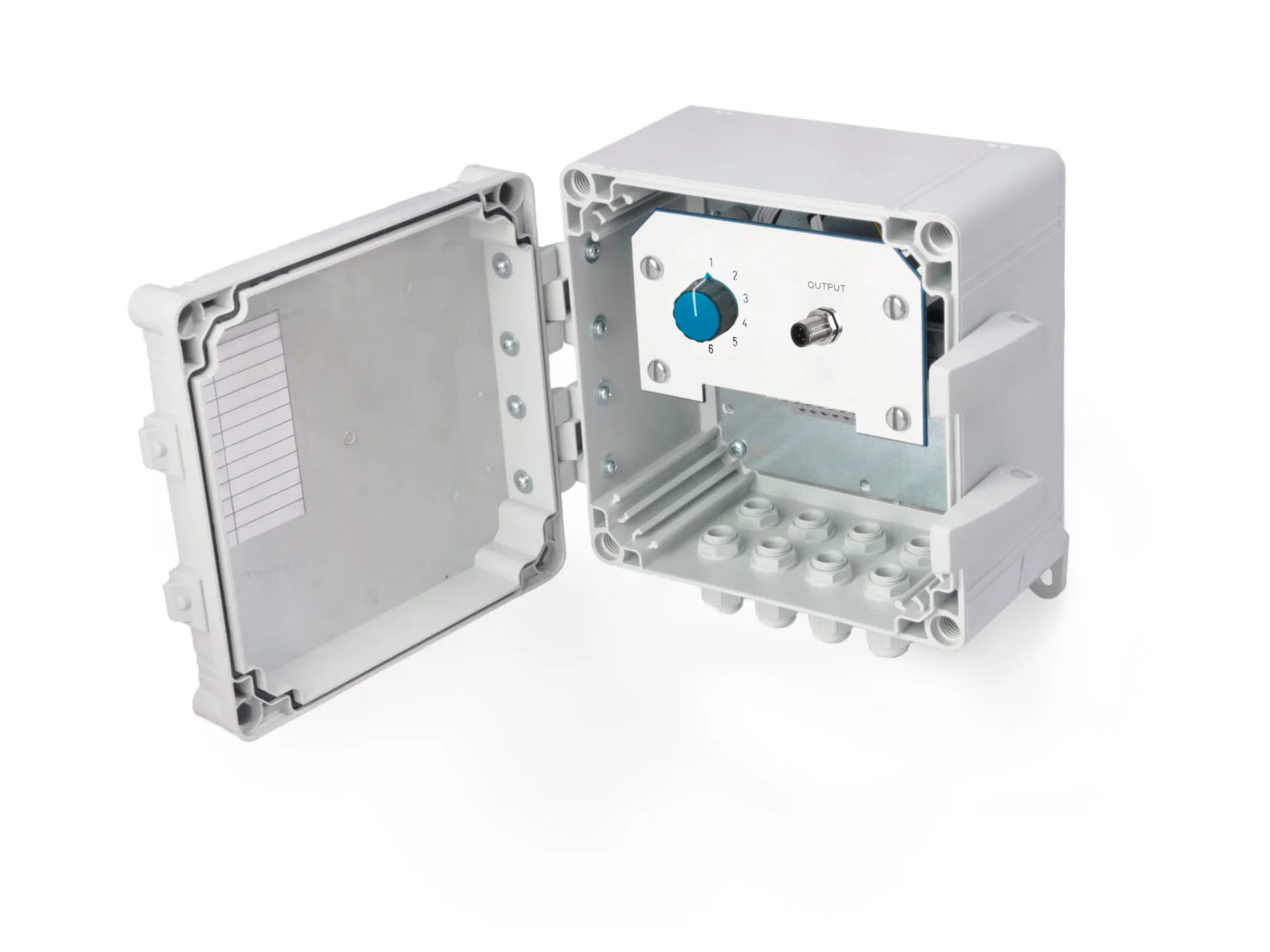
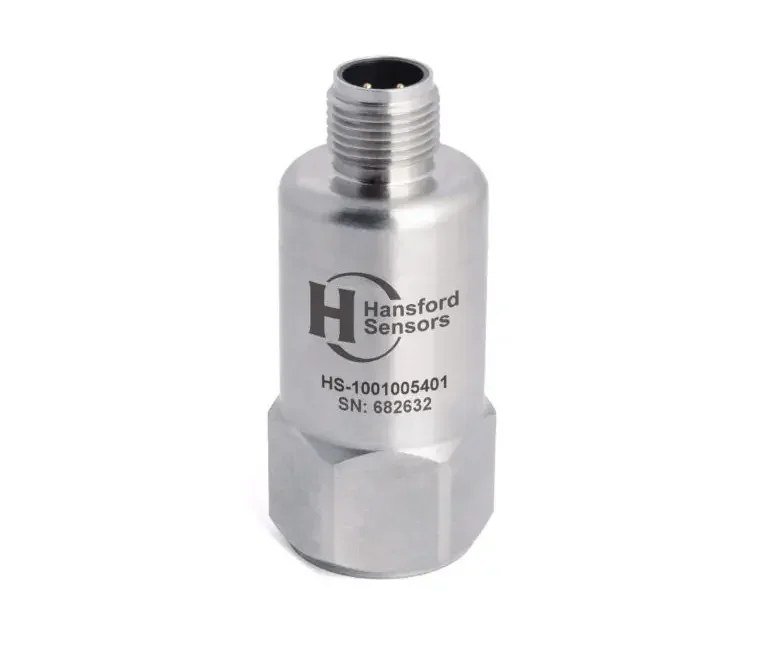
Vibration systems and switchesThe HS-100 series consists of stainless steel AC accelerometers with a standard sensitivity of 100 mV/g, with top or side exit. Sensors permanently mounted at the bearings and connected to HS-SE switch boxes allow readings to be taken with a data collector from one place, away from dust and moving parts. This is a convenient solution for mills, conveyors and fans on which measurements are taken at regular intervals.
Dust deposits on process fan blades gradually increase unbalance. HS-420 sends a 4–20 mA signal proportional to vibration velocity directly to the PLC or DCS, so the operator sees the trend and receives an alarm before vibration starts to threaten the bearings. For local alarm signalling, there are modules with a vibration switch function in the vibration systems and switches category.
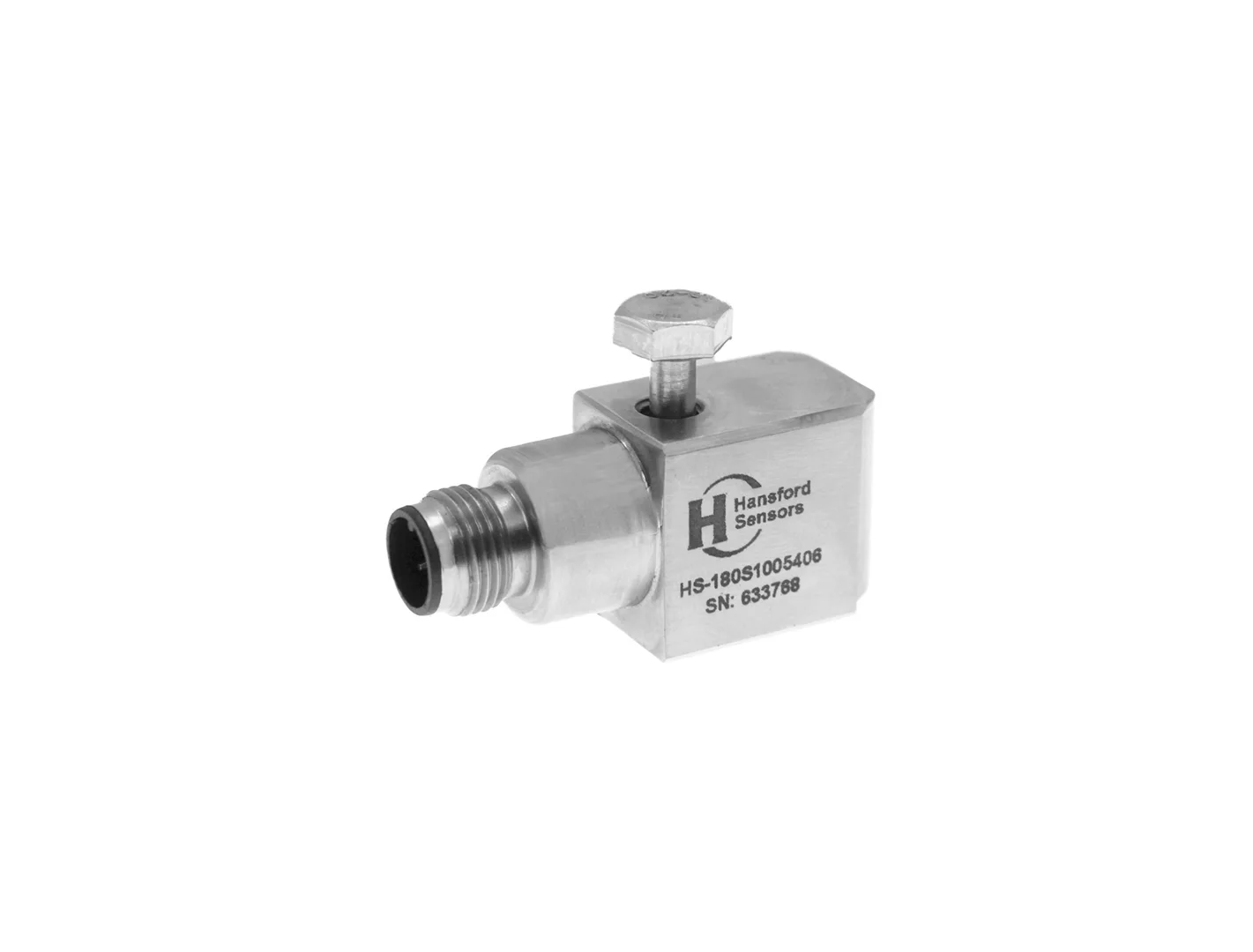
Under conveyor guards, at crushers and on drives with little space, the side exit HS-100S and the compact HS-180S accelerometers are a better fit. The low profile makes mounting easier, and a cable exiting from the side is less exposed to damage from falling material and accumulated dust than a connection pointing upwards.
The support rollers and the low-speed part of the kiln drive rotate very slowly, so fault signals have a low frequency and a small amplitude. At such points, consider the filtered HS-100F version or an AC accelerometer with higher sensitivity — details are given in the datasheets.
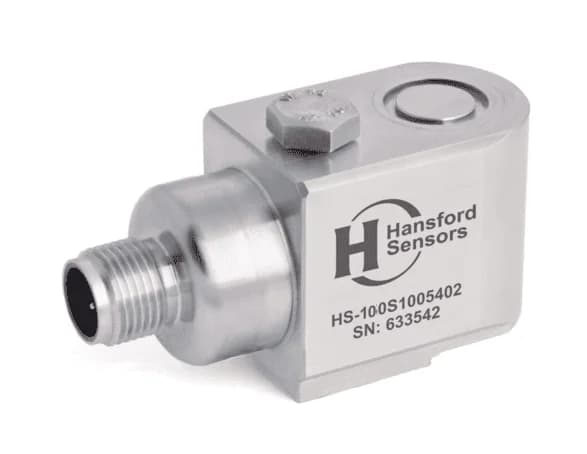
In hazardous areas, intrinsically safe accelerometers are used, such as HS-100I with ATEX and IECEx certificates — see accelerometers for Ex zones. Before ordering, check in the certificate and the datasheet whether the Ex marking of the selected version covers dust atmospheres and the correct zone. An intrinsically safe sensor operates in a circuit with a barrier or isolator located outside the hazardous area, and the parameters of the whole measurement loop must comply with the certificate.
On machines exposed to impact and abrasion, choose braided cables or cables in protective conduit. With 2-pin MS connectors, the sensor can be disconnected quickly during an overhaul — you will find suitable parts in the cables and connectors category.
PDF datasheet
Intrinsically safe version (ATEX, IECEx) — confirm suitability for dust zones in the Ex marking.
PDF datasheet
Side exit — where access is limited or dust settles.
PDF datasheet
Compact sensor for tight mounting locations.
PDF datasheet
Switch box for collecting data from multiple points.
PDF datasheet
Stainless steel accelerometer with top or side exit for crushers, mills and conveyors.
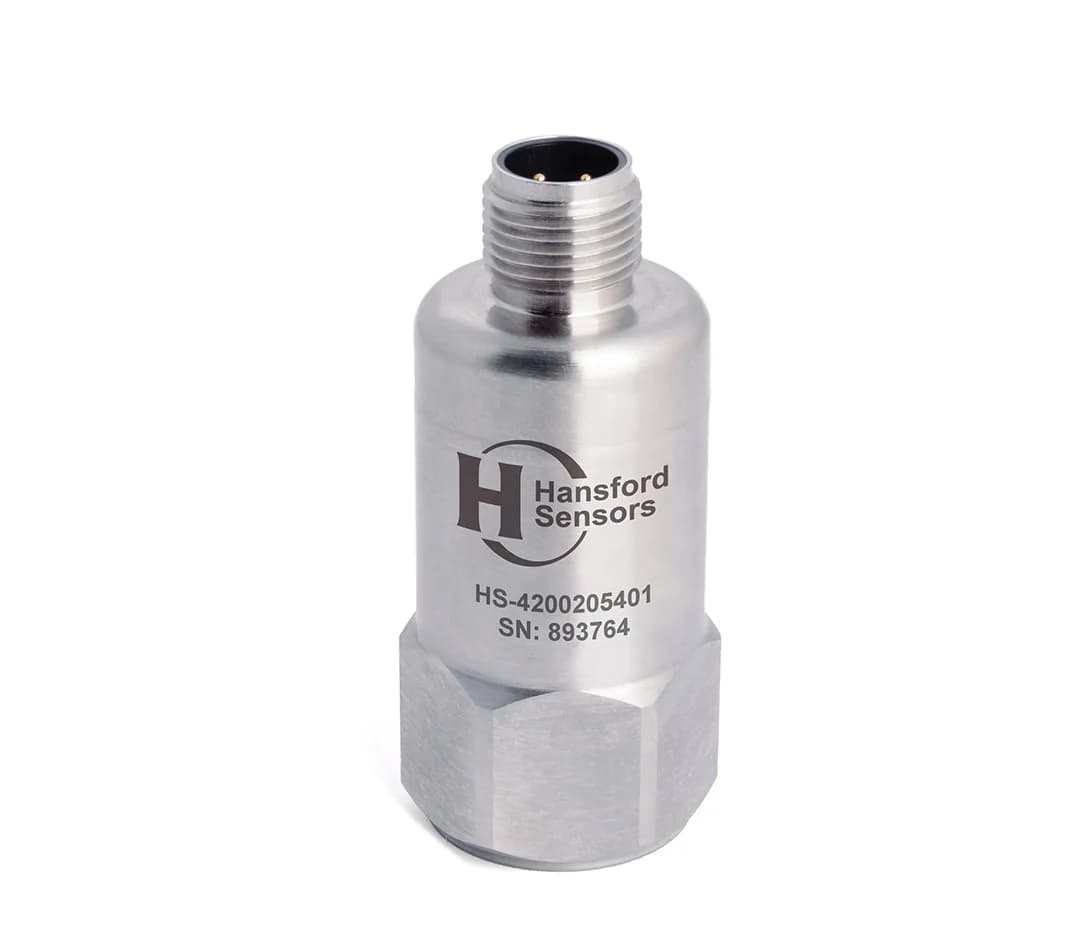
PDF datasheet
Monitoring fan and motor unbalance in the PLC system (4–20 mA).
At very low rotational speeds, bearing and gear mesh fault signals are weak. You therefore need a sensor with a good low-frequency response or a higher sensitivity, e.g. HS-100F. Mount the sensors rigidly on the bearing housings, and take measurements at a comparable rotational speed and kiln load. Changes on such machines develop slowly, so a long, regular trend is the most valuable.
When the sensor is to operate in a hazardous area designated in the explosion protection document. In cement plants, this most often applies to installations for grinding and feeding coal and alternative fuels. Intrinsically safe versions such as the HS-100I have ATEX and IECEx certificates, but check that the marking covers the relevant zone and dust group. A complete measurement chain also needs an intrinsically safe barrier or isolator.
Dust itself does not disturb the measurement if the sensor is rigidly screwed to a clean, flat surface. Problems usually come from dust getting into connectors and from cable abrasion. In dusty locations, versions with an integral cable or a sealed connector, together with braided cables, therefore work better. Dust deposits on fan impellers, on the other hand, are a common cause of unbalance, which the sensor can detect.
Describe the units you want to monitor — from the crusher to the kiln fans — and the Ex zones from the explosion protection document. We will help you select sensors, cables and switch boxes.