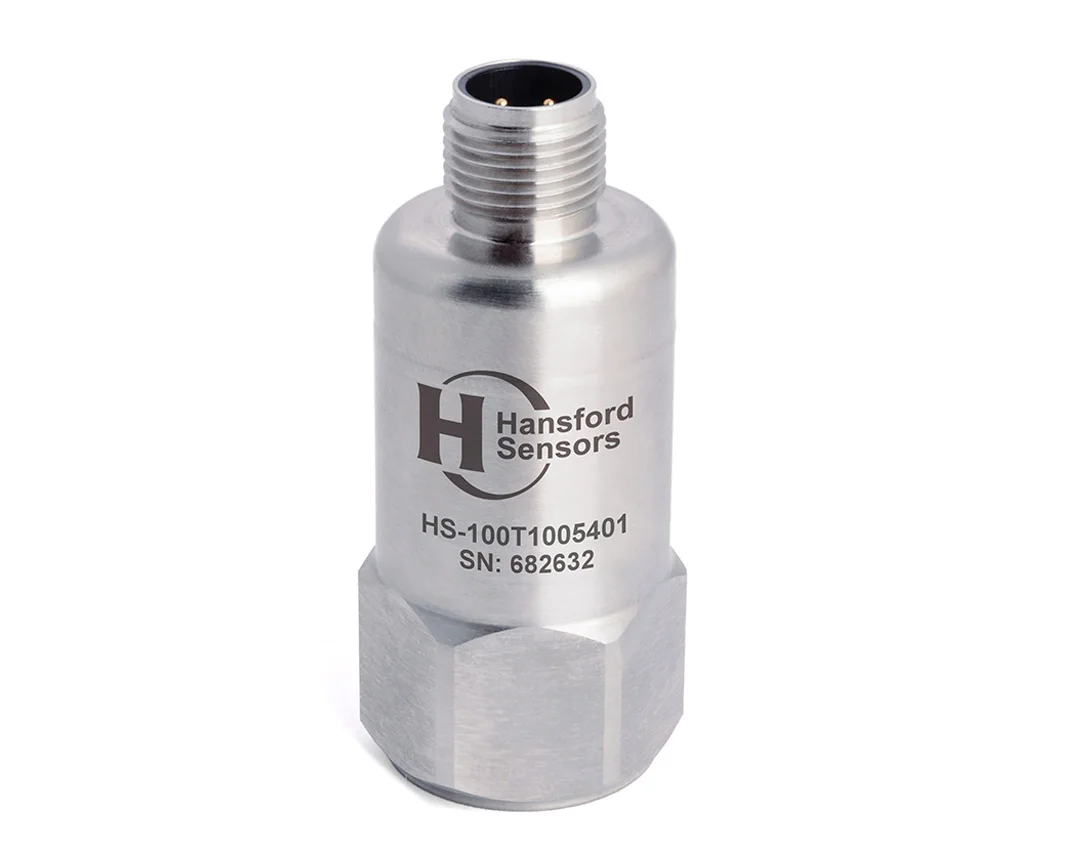
HS-100T Accelerometer with temperature output, top exit, M12 connector
Outputs: AC 100 mV/g (acceleration) and 10 mV/°C (temperature), M12 connector.
- AC IEPE + 10 mV/°C
- 10 … 500 mV/g
- Top exit
- IP67
PDF datasheet
Exclusive Hansford Sensors distributor for Poland, the Czech Republic and Slovakia
Vibration and temperature
Dual-output sensors measure vibration and temperature at a single point — where they are mounted, usually on the bearing housing. That means one mounting point, one cable and two independent signals — for a data collector, an online system or a PLC.
Outputs: AC 100 mV/g (acceleration) and 10 mV/°C (temperature), M12 connector.
PDF datasheet
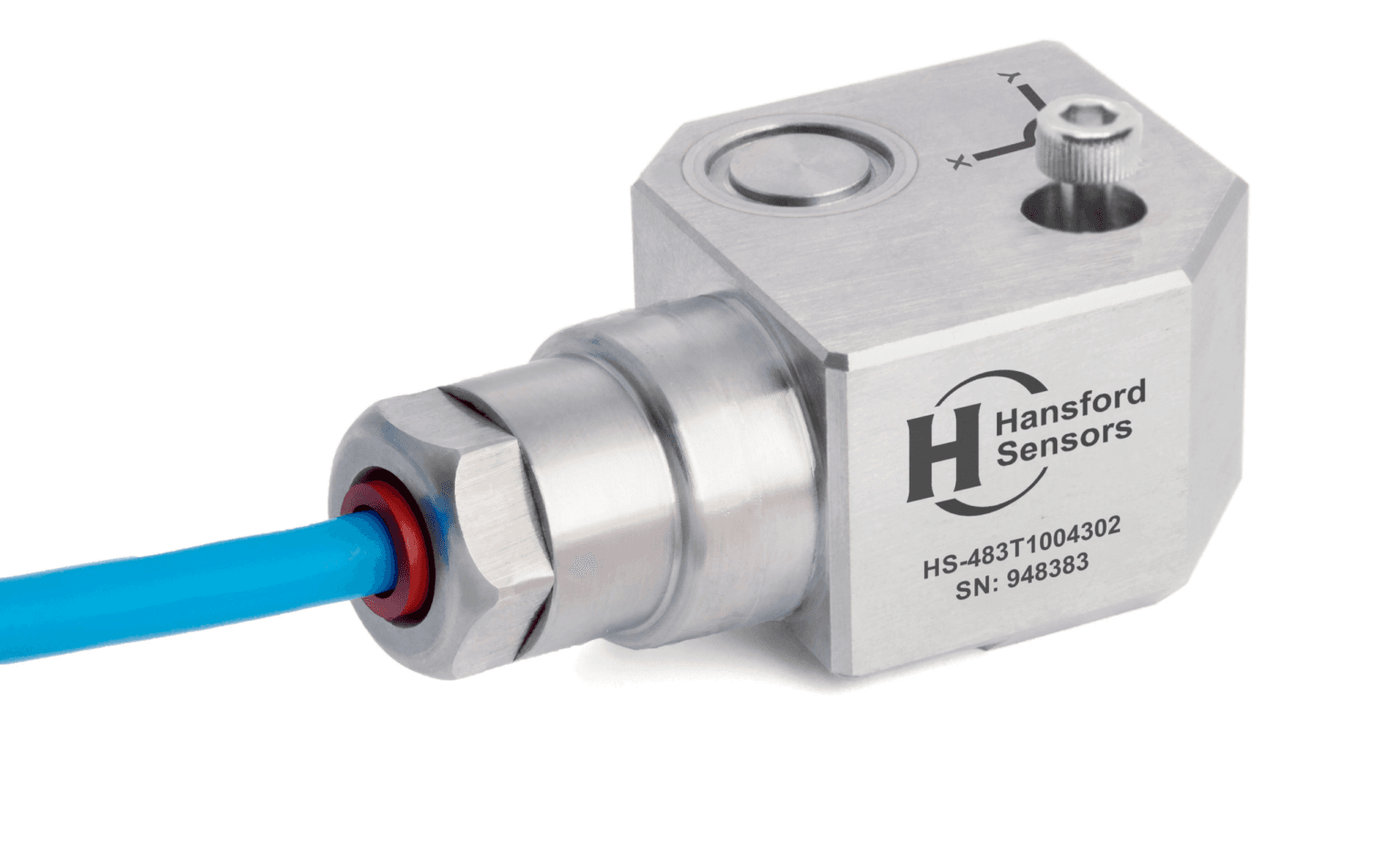
Outputs: 4–20 mA (vibration acceleration) and temperature signal, 8-core PUR cable.
PDF datasheet
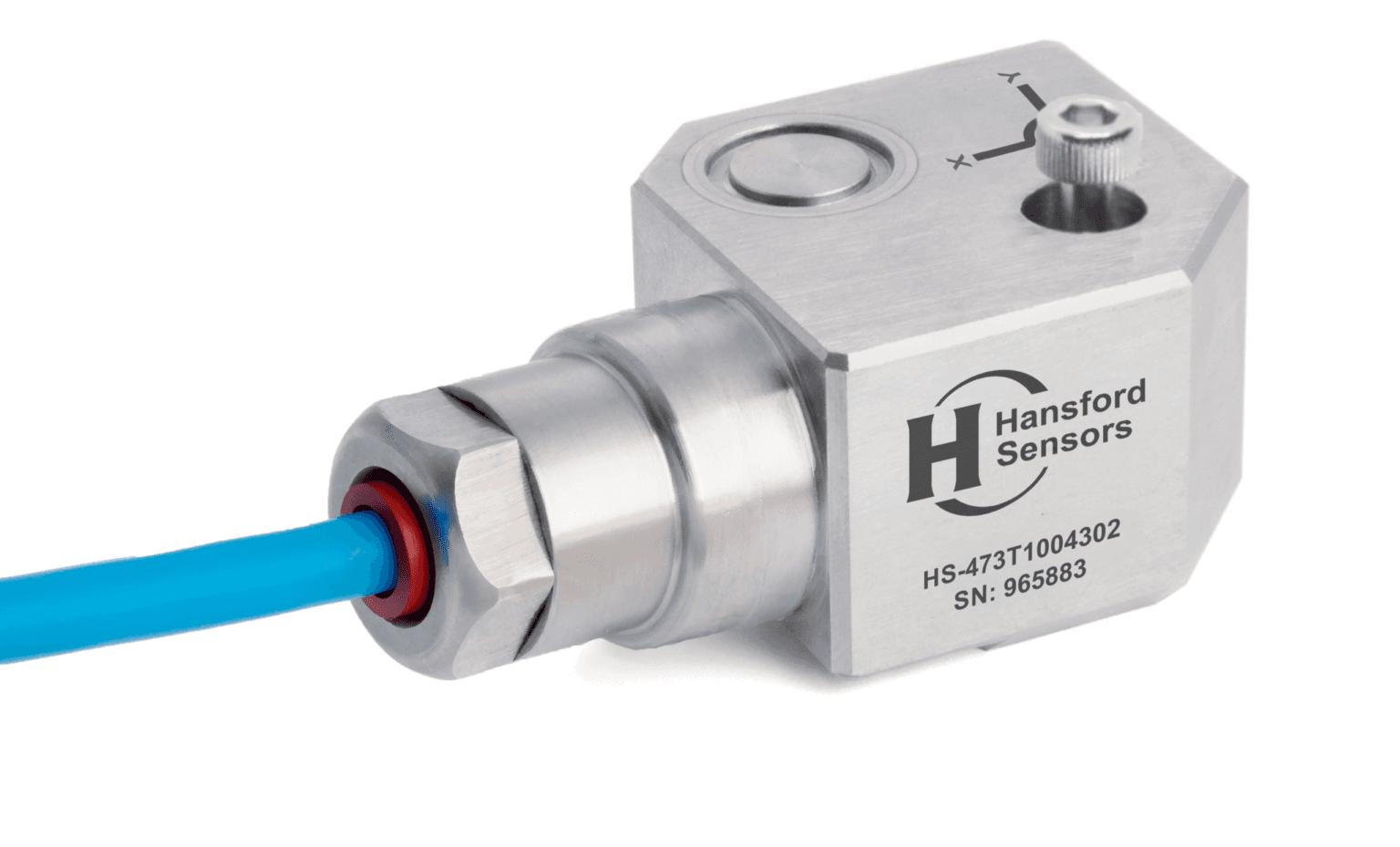
Outputs: 4–20 mA (vibration velocity) and temperature signal, 8-core PUR cable.
PDF datasheet
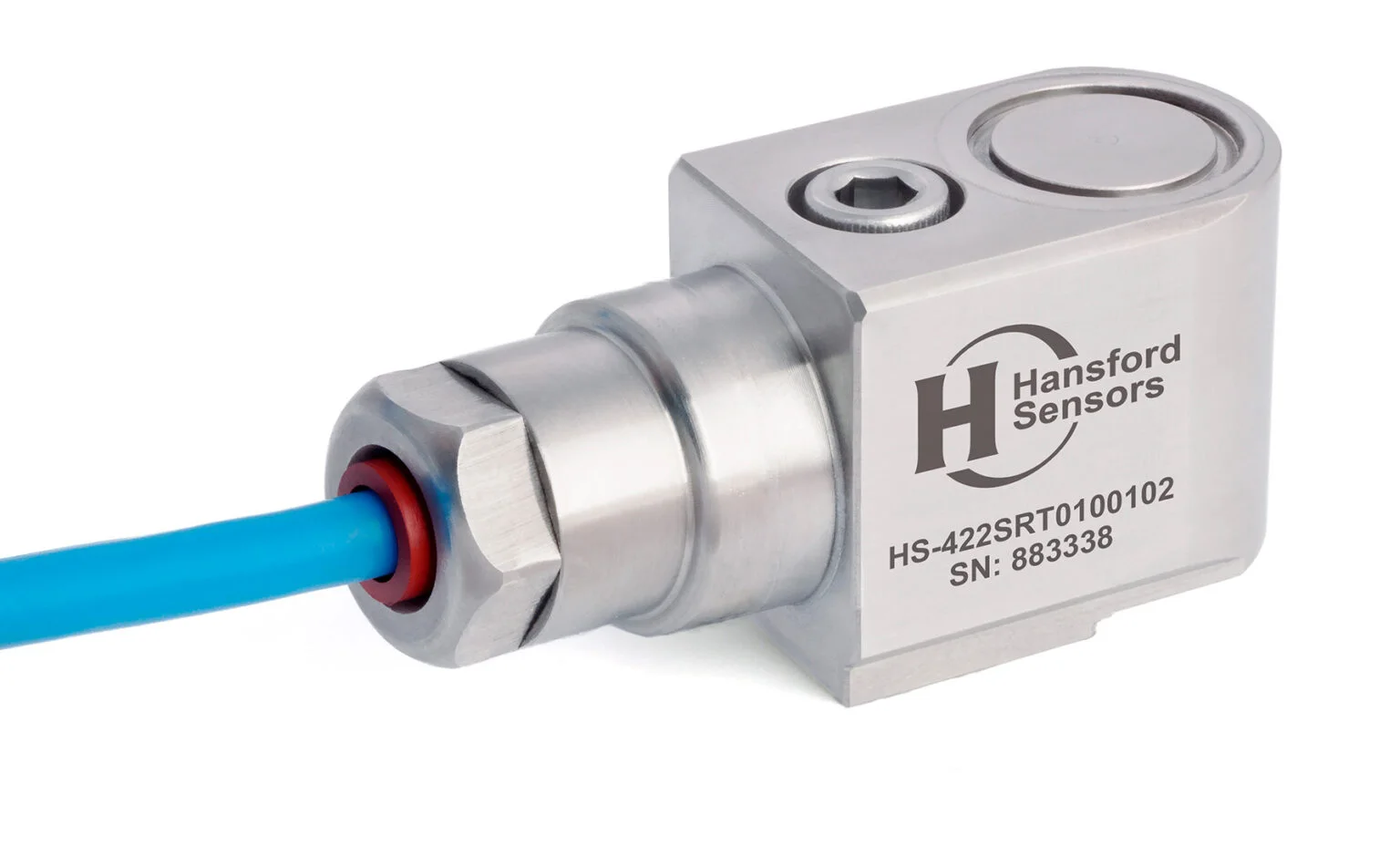
Outputs: 4–20 mA (acceleration) and PT100 (temperature).
PDF datasheet
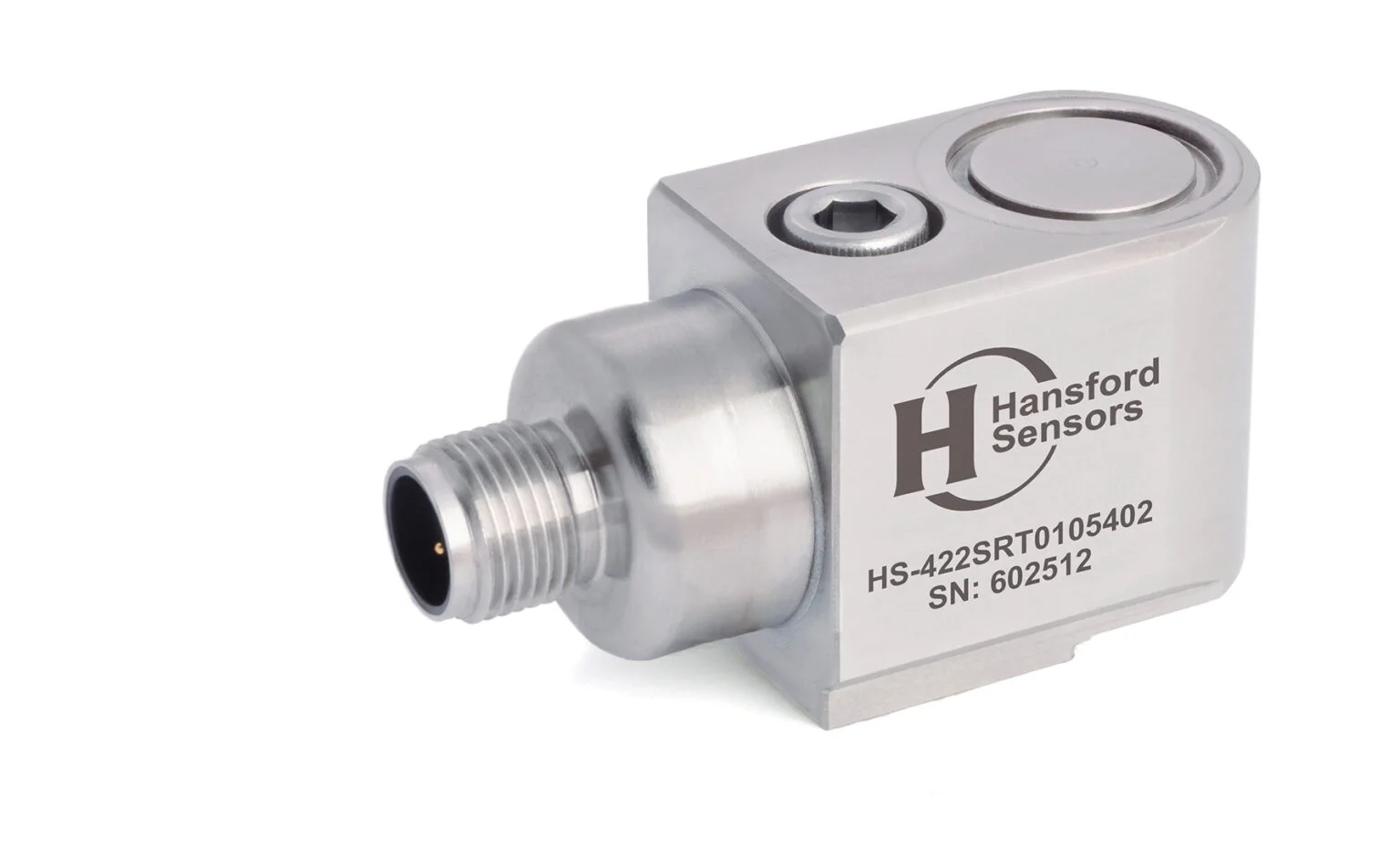
Outputs: 4–20 mA (acceleration) and PT100 (temperature), M12 connector.
PDF datasheet
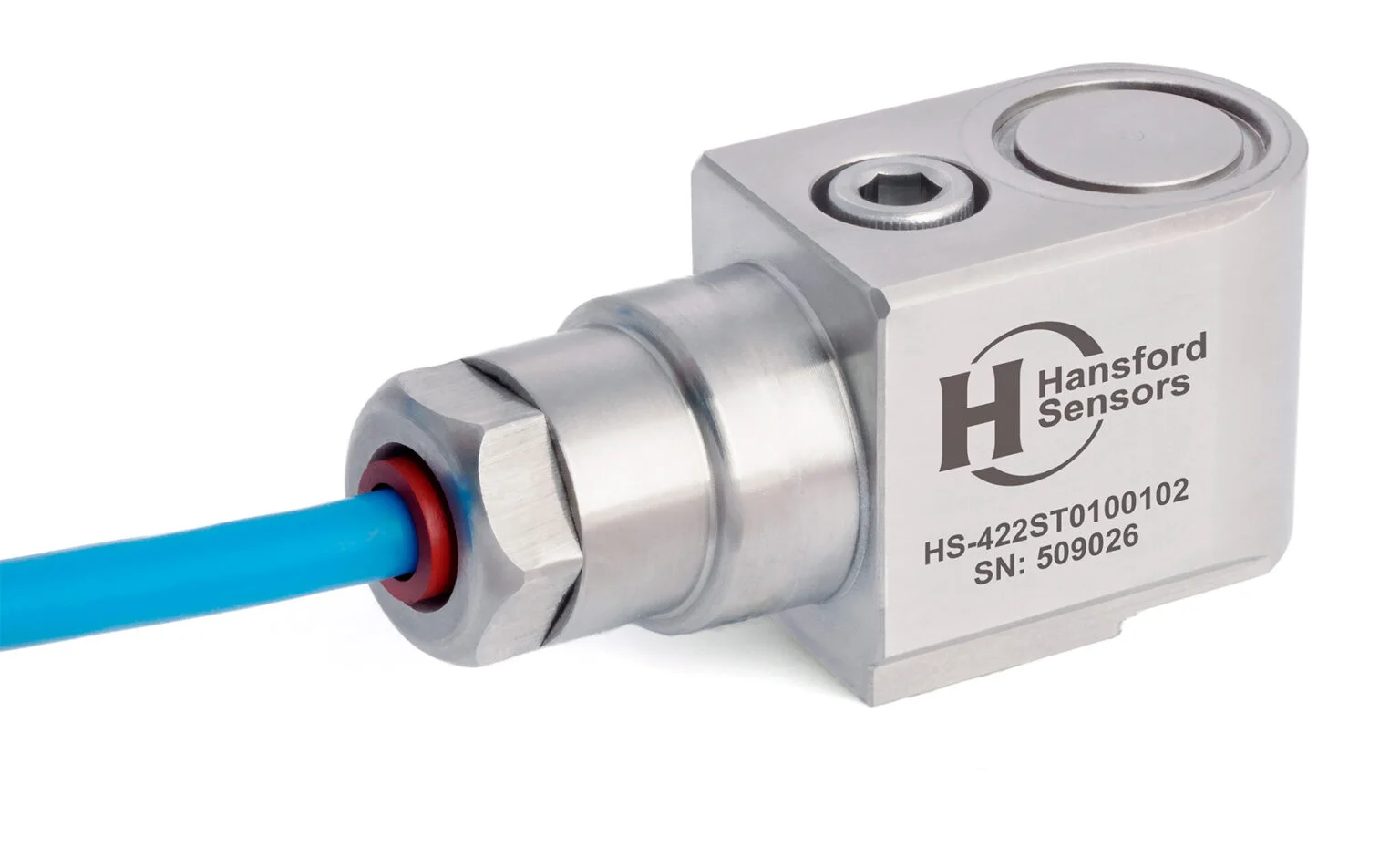
Outputs: 4–20 mA (acceleration) and temperature signal, PUR cable.
PDF datasheet
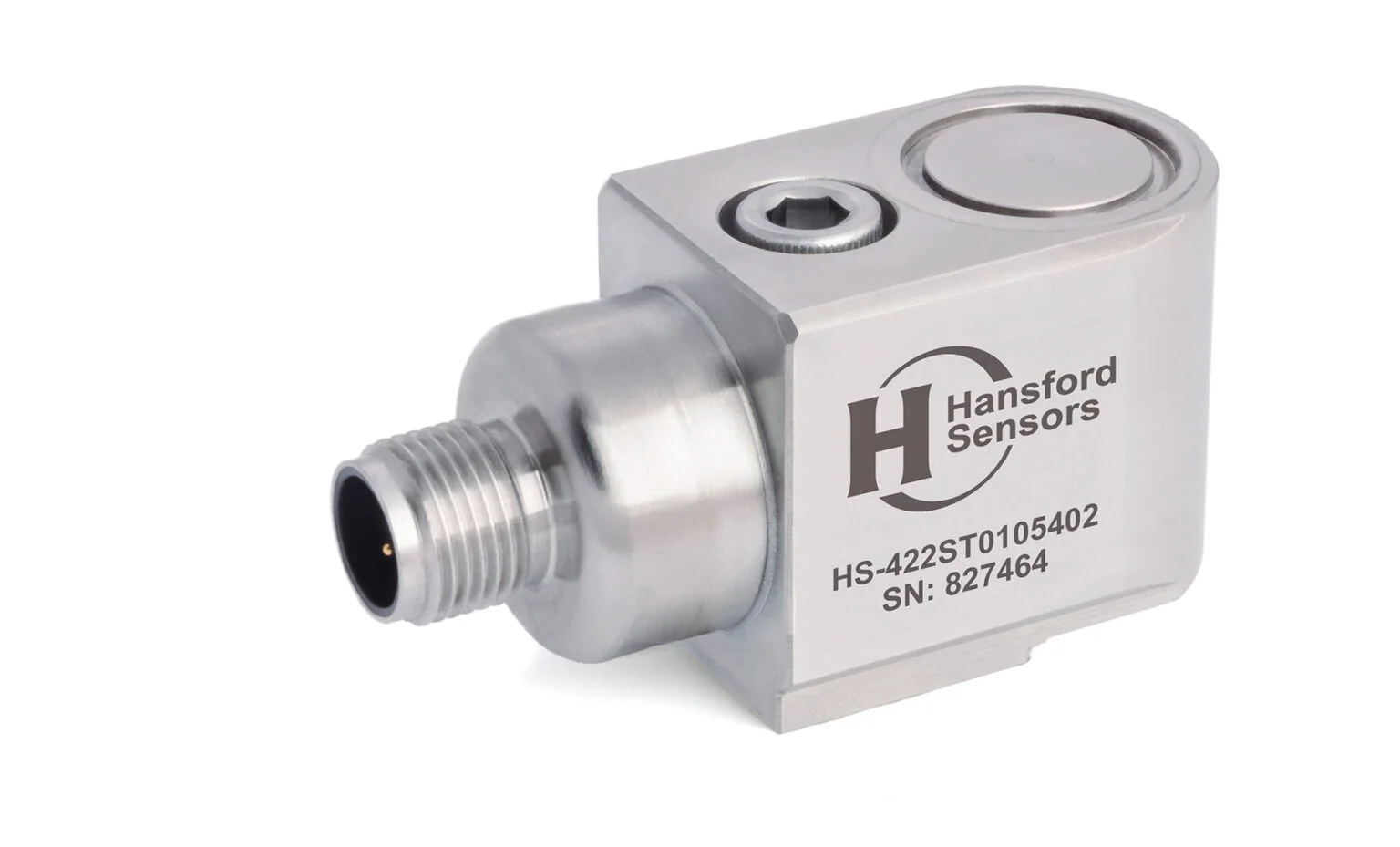
Outputs: 4–20 mA (acceleration) and temperature signal, M12 connector.
PDF datasheet
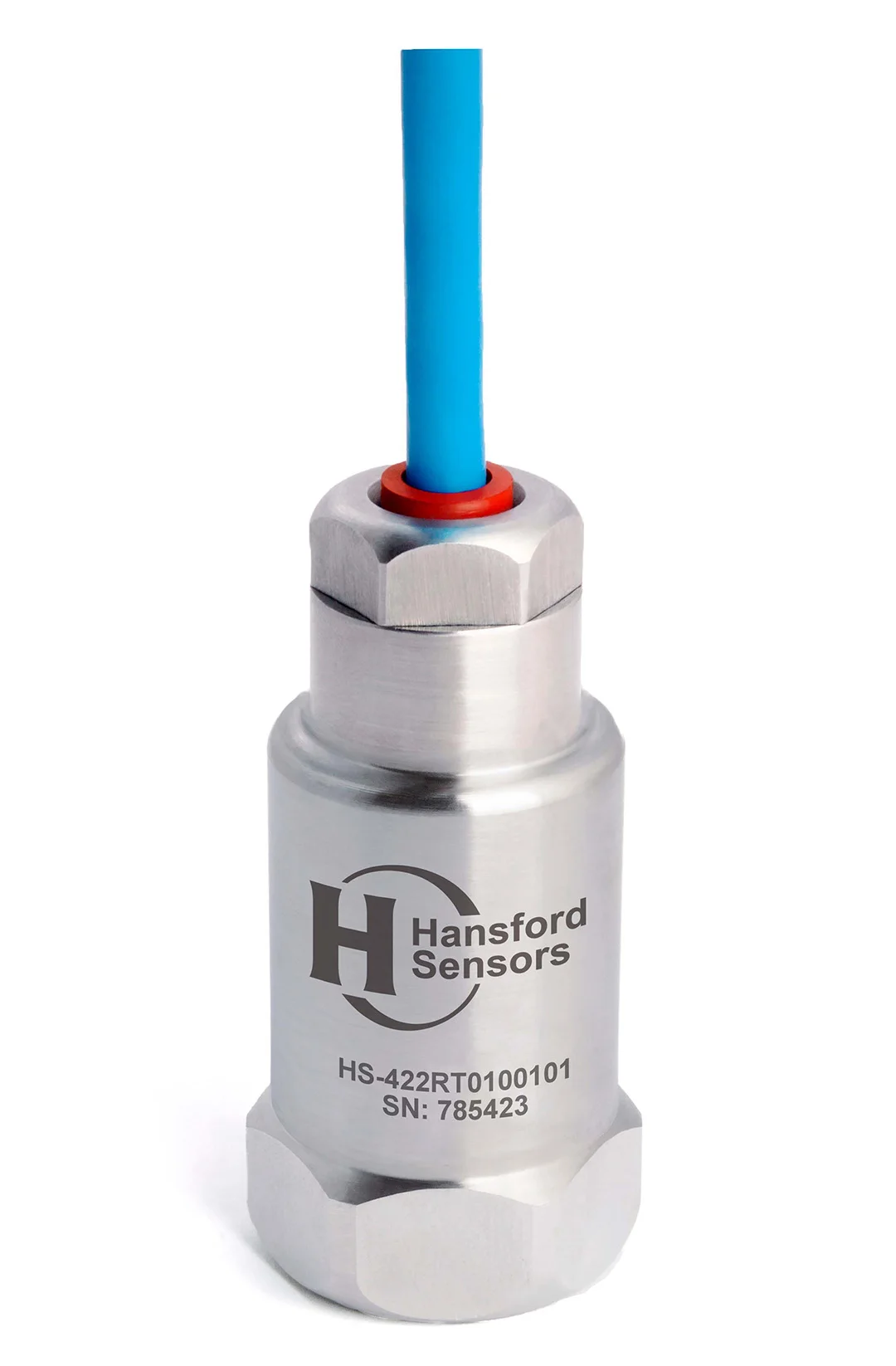
Outputs: 4–20 mA (acceleration) and PT100 (temperature), PUR cable.
PDF datasheet
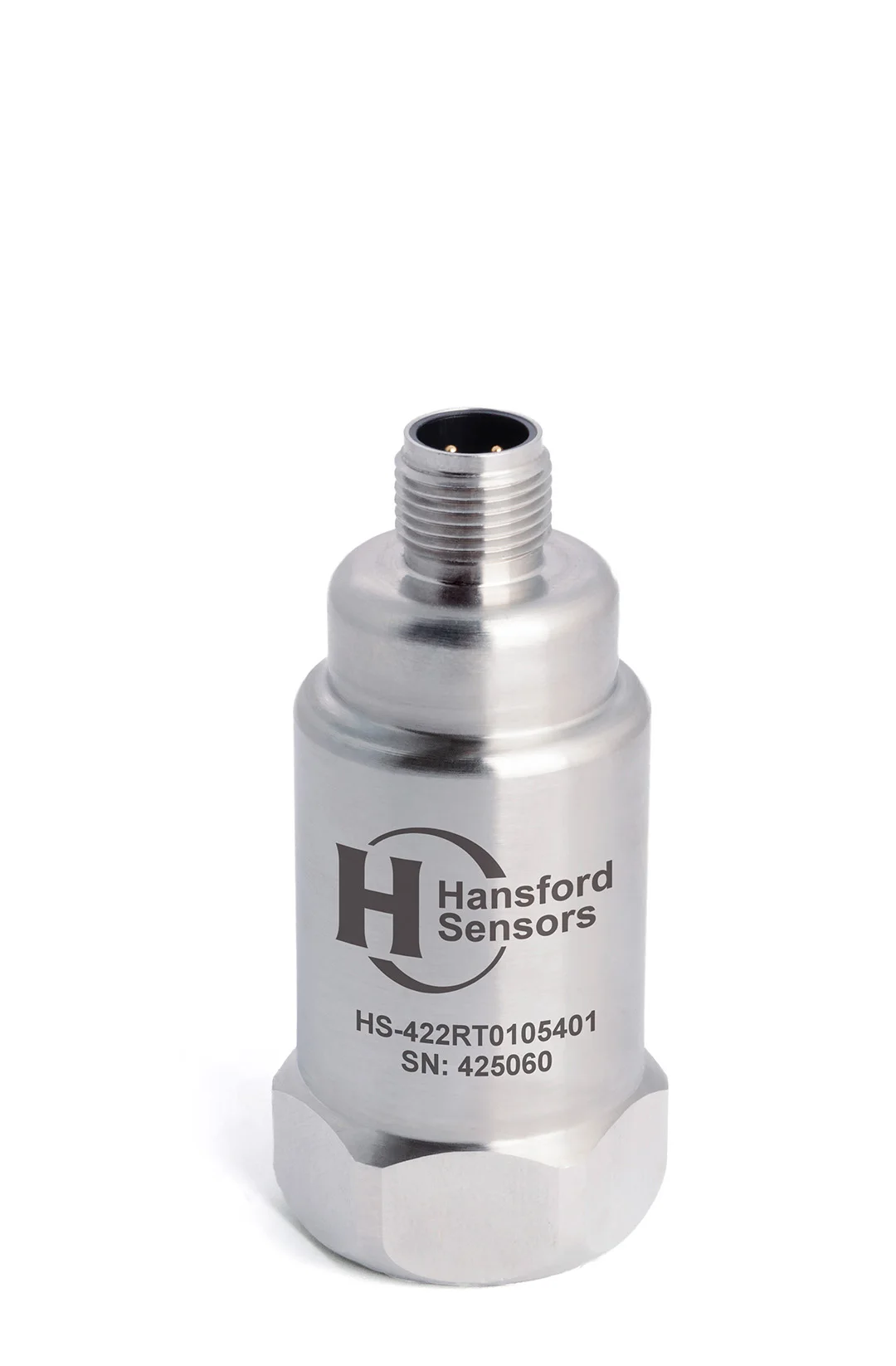
Outputs: 4–20 mA (acceleration) and PT100 (temperature), M12 connector.
PDF datasheet
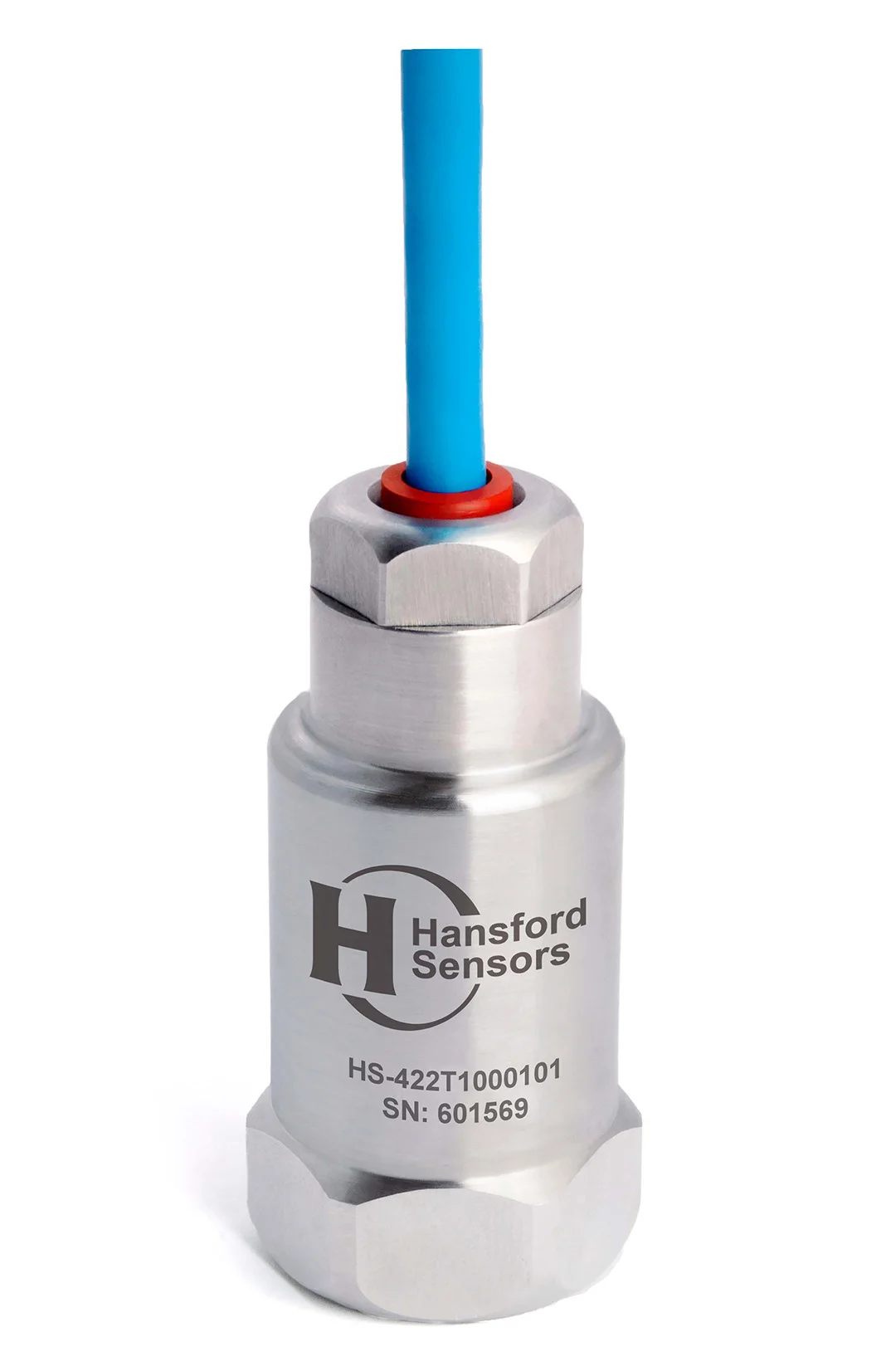
Outputs: 4–20 mA (acceleration) and 10 mV/°C (temperature), PUR cable.
PDF datasheet
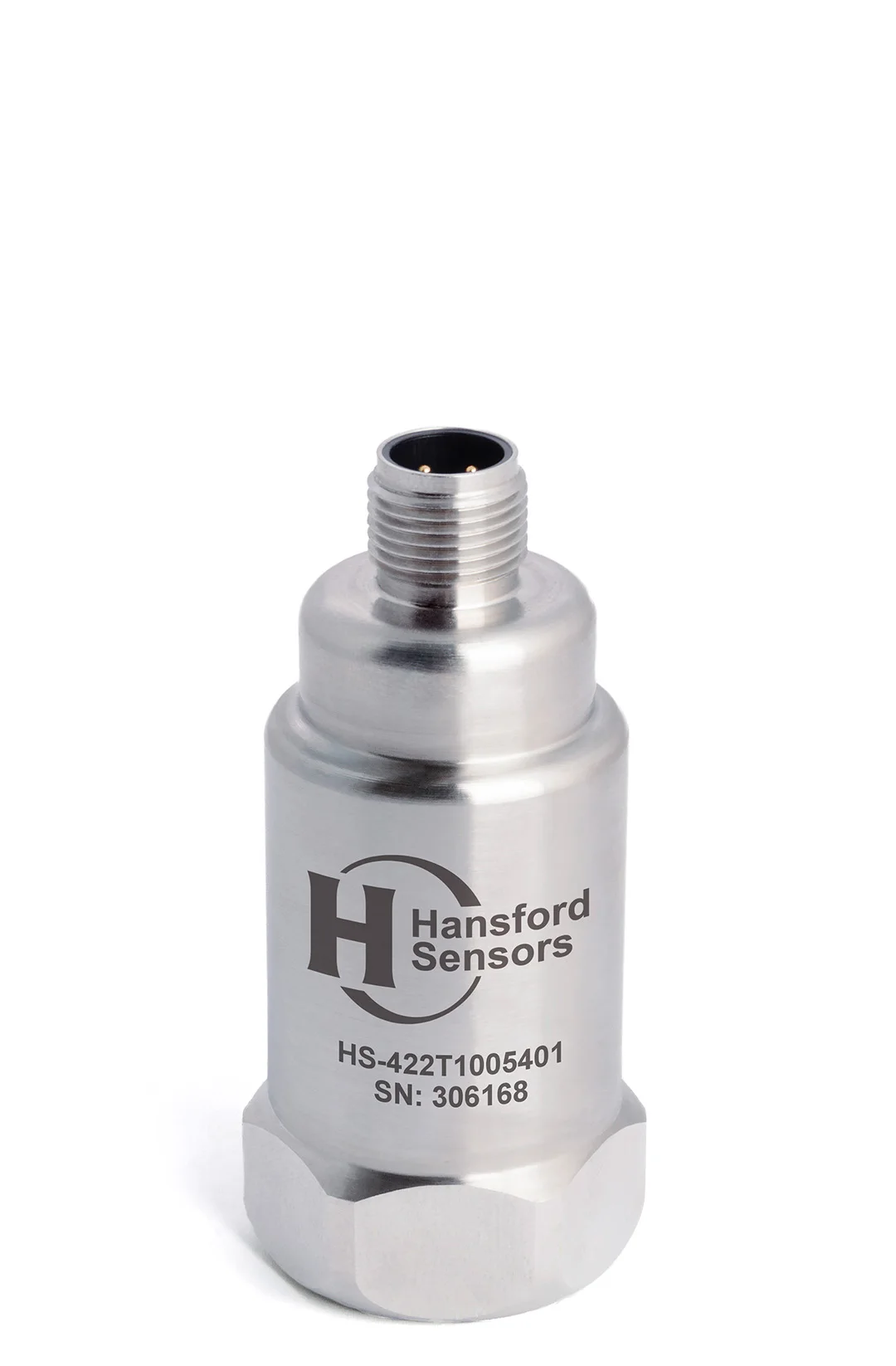
Outputs: 4–20 mA (acceleration) and 10 mV/°C (temperature), M12 connector.
PDF datasheet
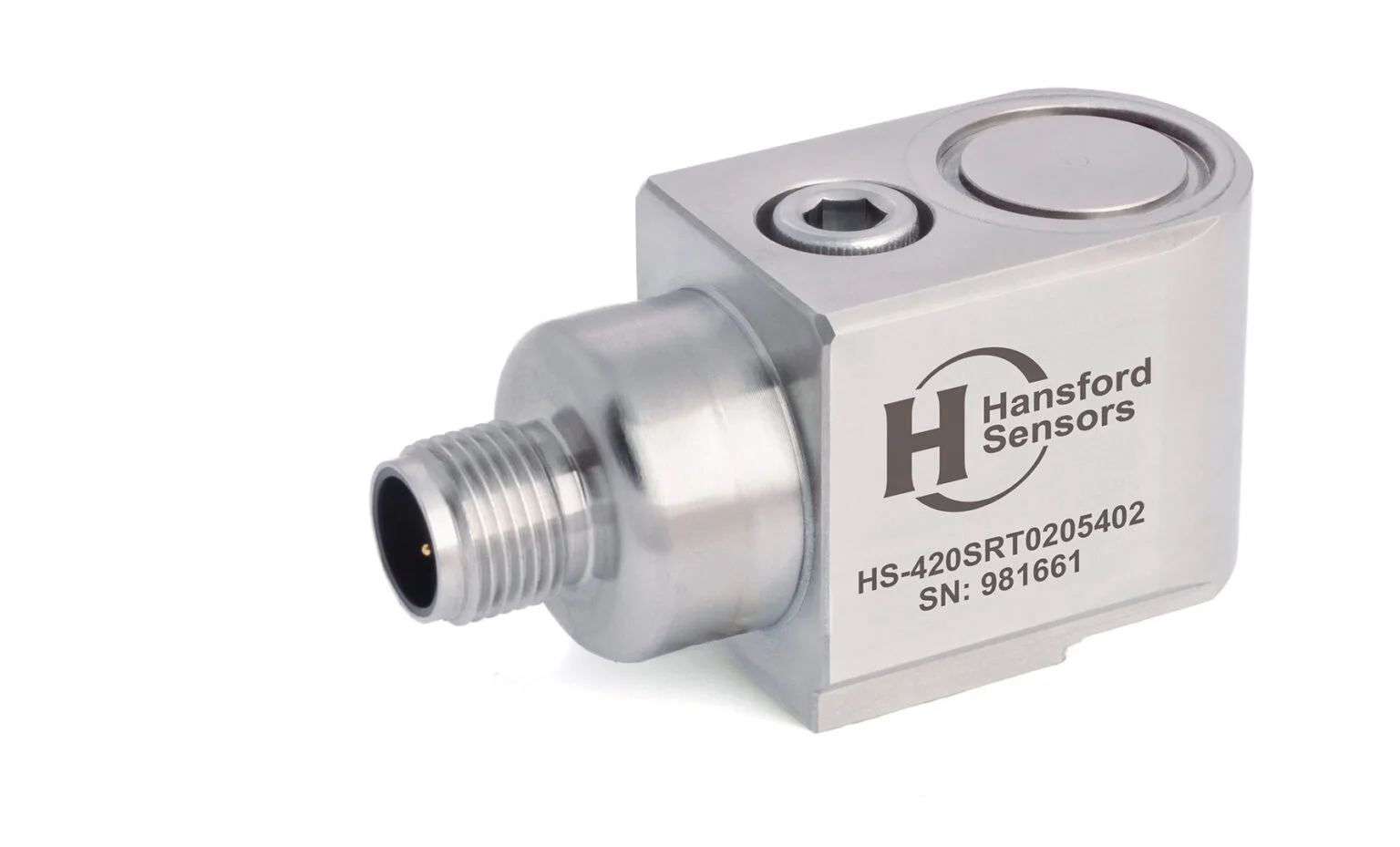
Outputs: 4–20 mA (vibration velocity) and PT100 (temperature), M12 connector.
PDF datasheet
Vibration and temperature describe the condition of a bearing from two sides. Vibration analysis can detect mechanical faults — rolling-element bearing damage, unbalance, misalignment or looseness — often long before they lead to a rise in temperature. Temperature, in turn, responds to problems that may be barely visible in the vibration signal: inadequate lubrication, overload or excessive friction.
Combining both signals makes the situation easier to assess. Rising vibration at a constant temperature may indicate developing mechanical damage, while a simultaneous rise in both may indicate a problem that needs a quick response. Temperature is also a signal that is simple to interpret, easy to show to operators and easy to use for alarms in the control system.
The sensor measures the temperature of its base, i.e. of the surface it is mounted on — not the temperature of the bearing itself. So mount it as close to the bearing as possible, on solid metal, and remember that the housing temperature changes with some delay.
10 mV/°C — a voltage proportional to temperature, read by data collectors, modules and voltage inputs; usually marked with the letter “T” in the model designation.
PT100 — a resistance temperature sensor, supported by standard controller temperature inputs and temperature transmitters; marked with the letters “RT” in the model designation.
The signal type and temperature measuring range of a specific model are given in its datasheet. Before choosing, check what input the device receiving the temperature signal has.
AC accelerometers with temperature output — vibration signal (100 mV/g as standard) and temperature from one sensor, e.g. HS-100T, HS-150T or HS-100RT with PT100 output, also in side-exit and triaxial versions (HS-173T). Category: accelerometers with temperature output.
4–20 mA transmitters with temperature output — vibration velocity or acceleration on the 4–20 mA loop plus an additional temperature output, e.g. HS-420T (10 mV/°C) and HS-420RT (PT100). Category: 4–20 mA transmitters with temperature output.
Three signals from one sensor — 4–20 mA, AC acceleration and temperature, e.g. HS-421T. Category: 4–20 mA transmitters with AC and temperature outputs.
Intrinsically safe versions — including HS-420IT and HS-422IT for hazardous areas; check the scope of approval in the certificate.
Temperature-only sensors — when vibration measurement is not needed at a given point. Category: temperature sensors.
For periodic measurements at many points there are switch boxes with vibration and temperature outputs, while the HS-557 module has a temperature input and a 4–20 mA temperature output for the controller.
Dual-output sensors are used mainly on the bearings of electric motors, pumps, fans, compressors and gearboxes — wherever both signals relate to the same bearing assembly. They are particularly useful in hard-to-reach places, where every additional sensor means a separate mounting hole and a separate cable, and in periodic measurements: a data collector with a temperature input reads both signals with a single connection.
Connection — a sensor with two signals needs more cores and pins, e.g. an M12 connector instead of a 2-pin MS connector. Check the pin-out in the datasheet and choose a matching cable.
Signal receiver — the data collector, module or controller must have an input for the type of temperature signal concerned.
Operating temperature range — this applies to both the sensor and the cable; at higher temperatures, check which cable version can withstand them.
Ex zones — in intrinsically safe versions, every signal used must be included in the intrinsically safe circuit in accordance with the certificate.
For help with selection, use the sensor selector — in the question about what you want to measure, select temperature. General selection rules are described in the guide How to choose a vibration sensor for your machine.
The sensor measures the temperature of its base, i.e. of the surface it is mounted on. When it is mounted on the housing close to the bearing, this value reflects changes in bearing temperature well, although with some delay and an offset. For assessing condition, what matters most is the trend and a comparison with similar measuring points.
It depends on the device that receives the signal. A 10 mV/°C output gives a voltage proportional to temperature and is convenient for data collectors and modules with a voltage input. A PT100 is a resistance temperature sensor, handled by the standard temperature inputs of PLCs and by temperature transmitters.
Usually, yes — the additional signal needs additional cores and connector pins. Check the pin-out in the datasheet and choose a cable with the right number of cores. Switch boxes with vibration and temperature outputs are used to read many points with a data collector.
Yes. The catalogue includes intrinsically safe sensors with a temperature output, e.g. HS-420IT and HS-422IT. The scope of approvals, the circuit parameters and the way the temperature signal is connected are defined in the certificate and the manufacturer’s instructions. They must be taken into account in the design of the intrinsically safe installation.
Send a list of models or describe the machine and the operating conditions — we will choose the right version and prepare a quotation.