Other industries: machine vibration monitoring
Vibration monitoring is useful wherever motors, pumps, fans and gearboxes operate — outside heavy industry too. Here we have collected guidance for machine building, water and wastewater, building services, automotive production and other plants.

What fails most often
Unbalance, misalignment, mechanical looseness and rolling-element bearing damage look similar in vibration measurements regardless of the industry. The differences lie in the consequences of a failure, the operating conditions of the sensor and the system the signal should go to: the machine controller, the building BMS, the water network telemetry or the plant diagnostic system.
In water supply and wastewater treatment, many sites — pumping stations, sewage pumping stations, blower stations — operate unattended, often in damp conditions and aggressive atmospheres. In building services, air handling units, chillers and circulation pumps maintain conditions in buildings where an interruption is particularly serious, such as hospitals, laboratories or server rooms. On automotive lines, a stoppage at one station can halt the whole line, and machine builders can offer condition monitoring as part of the equipment.
If your industry is not on the list, the selection principle stays the same: it starts with the machine, the conditions at the mounting location and the required signal.
Typical machines
- Pumps in water and wastewater pumping stations
- cavitation, bearing damage, unbalance from deposits on the impeller
- Aeration blowers and compressors
- unbalance, bearing damage, misalignment
- Air handling units, fans and chillers
- unbalance, bearing wear, mounting looseness
- Machine tools and spindles
- spindle bearing damage, unbalance of tools and tool holders
- Presses and production line equipment
- mechanical looseness, bearing and gearbox damage
- Agitators, centrifuges and decanters
- unbalance, bearing damage, mechanical looseness
From the machine to the monitoring system
01Machines in this industry
Pumps in water and wastewater pumping stations, aeration blowers and compressors, air handling units, fans and chillers and others — measuring point on the bearing housing.
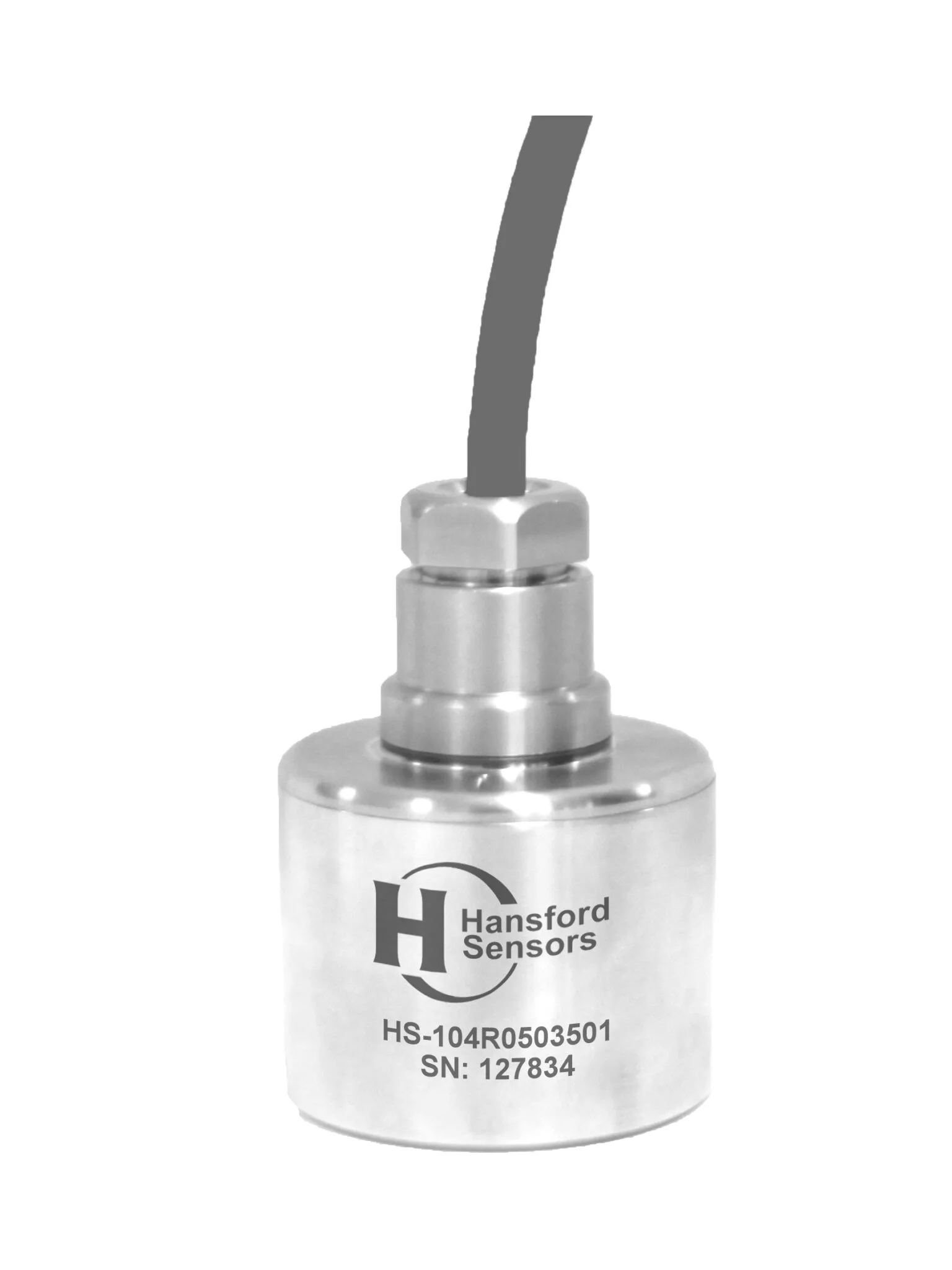
02Sensor
An IEPE accelerometer or a 4–20 mA sensor converts vibration (and often temperature) into an electrical signal.
Industrial IEPE accelerometers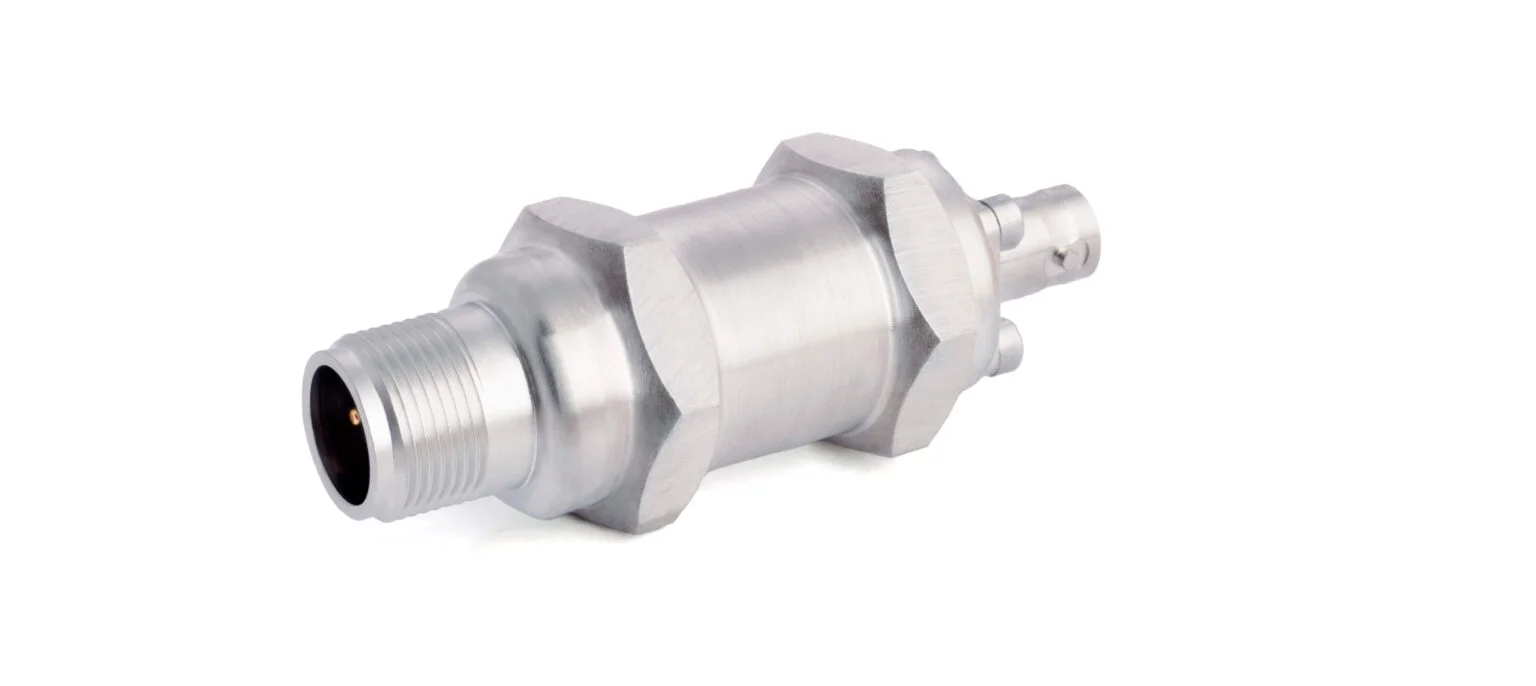
03Signal
A cable with the right connector and a junction box carry the signal from many measuring points to the system.
Cables and connectors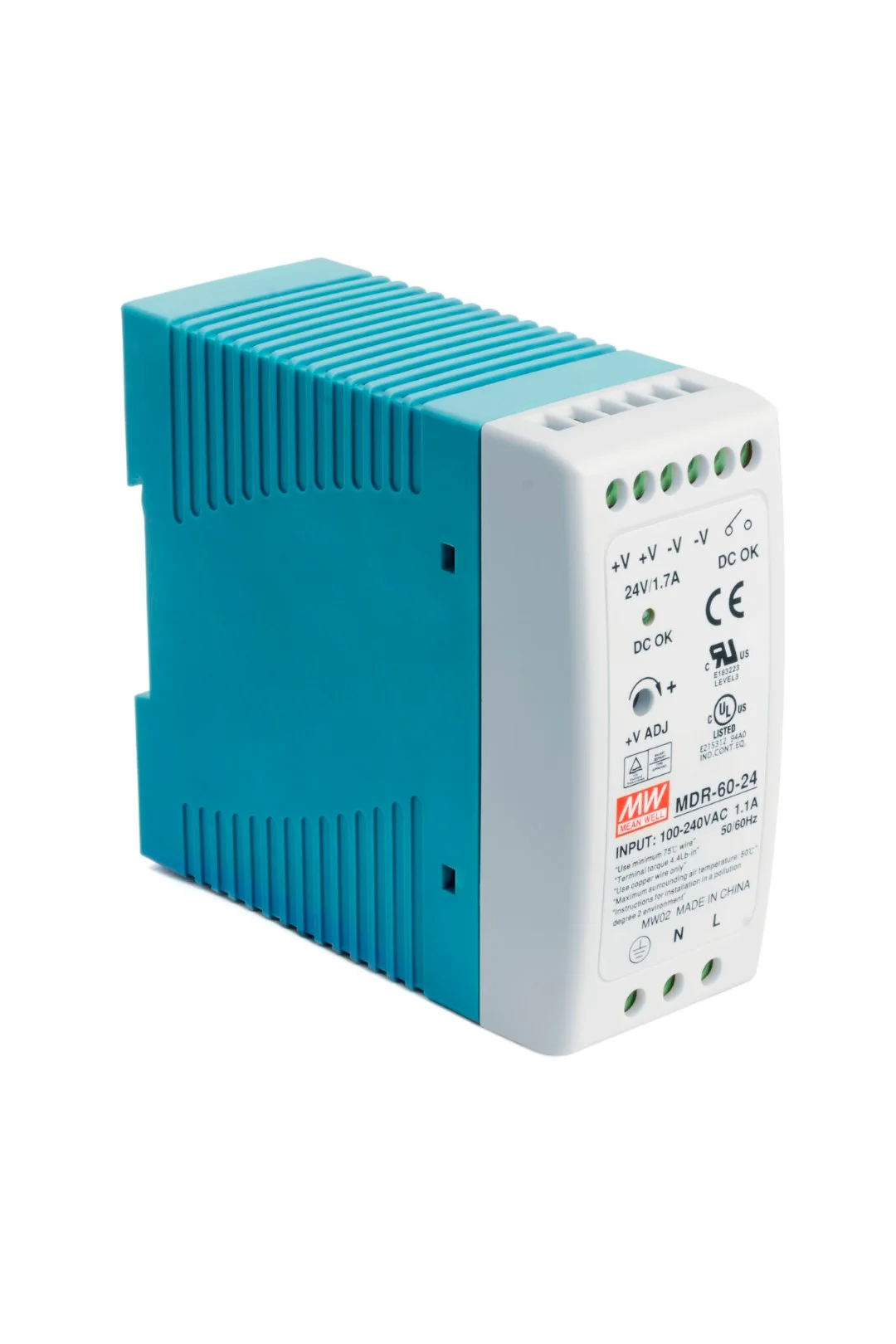
04Monitoring
PLC, DCS, an online system or a data collector: trends, alarm thresholds and diagnostics before a failure happens.
Vibration systems and switches
How to choose the measurement
Which signal to choose
AC (IEPE) accelerometers, such as the HS-100 with a standard sensitivity of 100 mV/g, provide the full vibration signal for analysis with a data collector or in an online system and make it possible to determine the cause of a fault. The standard frequency range of AC accelerometers is 0.8 Hz – 15 kHz (±3 dB).
4–20 mA transmitters send the overall vibration level directly to a PLC, BMS or telemetry system: the HS-420 measures vibration velocity, the HS-422 acceleration, and the HS-421 combines a 4–20 mA output (velocity) with an AC output (acceleration).
You will find the full range in the industrial accelerometers and 4–20 mA vibration sensors categories.
Machine building
A machine builder can plan measurement points at the design stage: flat, spot-faced surfaces with tapped holes near the bearings, cable routes and space for a connector. A 4–20 mA transmitter connected to the machine controller makes it possible to add a vibration monitoring function to the machine, and OEM accelerometer capsules are designed for building into the manufacturer’s own equipment.
Water and wastewater
In unattended pumping stations and blower stations, the 4–20 mA signal can be fed to a local controller and on to the telemetry system. At sites with designated hazardous areas — for example, near biogas installations — intrinsically safe versions are needed.
Building services
Air handling units, chillers and circulation pumps can be monitored with 4–20 mA transmitters connected to the BMS as a standard analogue input. This is a simple way to get an alarm when fan unbalance, misalignment or mounting looseness increases.
Mounting and cabling
Rigid mounting determines the quality of the measurement. In the sensor mounting hardware category you will find mounting studs, adhesive mounting pads, mounting pads for motor cooling fins and magnetic mounts for periodic measurements, and in the cables and connectors category, cable assemblies and connectors for the connector versions of sensors.
Product groups for other industries
- Industrial IEPE accelerometers AC (IEPE) accelerometers for vibration analysis with a data collector or in an online monitoring system.
- 4–20 mA vibration sensors (LPS) 4–20 mA sensors for PLC, BMS and telemetry — simple, continuous monitoring of the vibration level.
- Cables and connectors Cable assemblies and connectors for connector-version sensors.
- Vibration sensor mounting hardware Studs, adhesive mounting pads, fin mounts, and magnets for periodic measurements.
Industry questions
Is a 4–20 mA vibration transmitter enough for HVAC systems?
Where the aim is an alarm and a trend in the BMS — e.g. on air handling units and circulation pumps — a 4–20 mA velocity transmitter such as the HS-420 is usually sufficient. The BMS reads it like any other analogue input, without additional devices. If you need to find the cause of increased vibration, an AC signal measurement and spectrum analysis are required.
How should a series-produced machine be prepared for mounting vibration sensors?
At the design stage, provide a flat, spot-faced surface with a tapped hole at each bearing, preferably in the radial direction, on a rigid part of the housing. Plan the cable route and the connector position so that the sensor can be replaced without removing guards. Choose the mounting thread and connection type according to the datasheet of the selected sensor.
Can a sensor be mounted on a pump in a sewage pumping station?
Yes. On dry-installed pumps, sensors are mounted on the pump and motor bearing housings. Because of the moisture and aggressive atmosphere, choose a version with an integral cable and a suitable IP rating, and in Ex zones an intrinsically safe version. At unattended sites, the 4–20 mA signal can be passed to the telemetry system.
Further reading
Can’t see your industry?
Describe the machine, the operating conditions and the system the signal should go to. We will help you select the sensor, cable and mounting method.