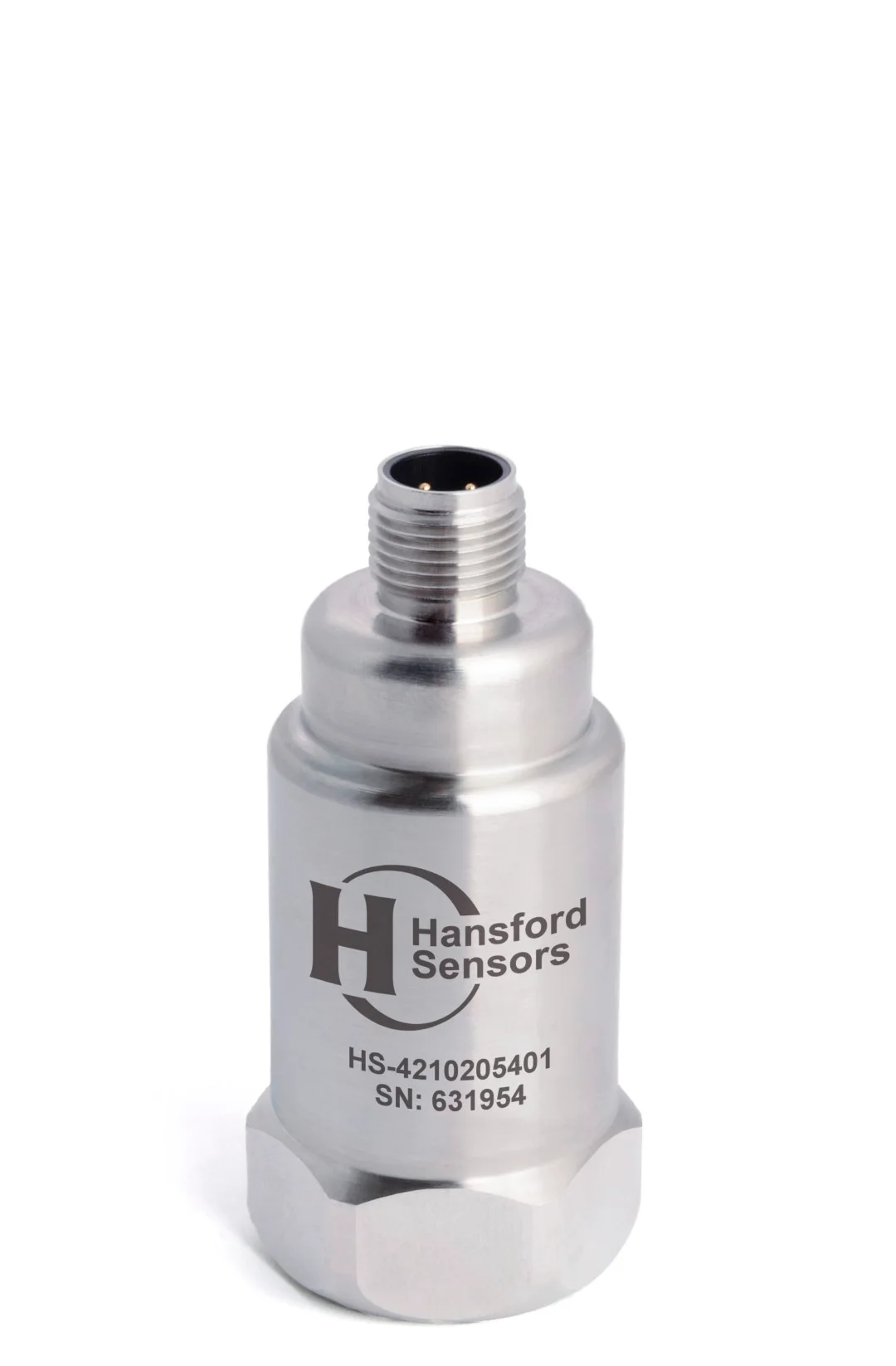
Hansford SensorsHS-421 seriesWith additional AC output
HS-421 4–20 mA vibration sensor (velocity) with additional AC output, top exit, M12 connector
Outputs: 4–20 mA (vibration velocity) and AC (acceleration), M12 connector.
- Output AC IEPE + 4–20 mA
- Exit Top exit
- IP IP67
- Connector M12
Technical data is taken from the manufacturer's documentation. Before ordering, please confirm the parameters against the current datasheet or with our engineer.
HS Sensors · HS-421 · as of 07/10/2026
Key features
- For PLC / DCS systems and data collectors
- Can be configured for the application
- Piezoelectric element in compression design
Technical specifications
Parameters as specified by the manufacturer.
| Measured quantity | Vibration acceleration, Vibration velocity |
|---|---|
| Number of measuring axes | 1 axis |
| Measuring range — velocity | 10 / 20 / 25 / 50 / 100 mm/s (standard: 10) |
| Output type | AC (IEPE) — acceleration, 4–20 mA |
|---|
| Cable / connector exit | Top exit |
|---|---|
| Connector | M12, 4-pin |
| Mounting thread | 1/4"-28 UNF, female (standard), 1/4"-28 UNF, male, Quick Fit, female, M6 × 1 mm, male, M8 × 1.25 mm, male, M10 × 1.5 mm, male |
| IP rating | IP67 |
|---|---|
| Operating temperature | −25 … +120 °C |
| Electromagnetic compatibility (EMC) | EN 61326-1:2013 |
| Sensing element | PZT — compression |
|---|---|
| Case material | Stainless steel |
| Weight | 150 g (nominal) |
| Features | For data collectors, For PLC / DCS systems |
| Model | HS-421 |
|---|---|
| HS Sensors part no. | HS-421-TOP-M12 |
| Manufacturer's product name | HS-421 – Top Exit – 4 Pin M12 Dual Output Accelerometer |
Documentation
- HS-421 datasheet (metric units)PDF · Datasheet · EN · 467.3 KB · TS030.11
- HS-421 datasheet (imperial units)PDF · Datasheet · EN · 465 KB · TS030U.8
- HS-421 user manual (and others)PDF · Manual · EN · 288.8 KB
- Stud and pad mounting instructionsPDF · Installation guide · EN · 429.3 KB
- HS-421 3D CAD modelZIP · 3D CAD model · EN · 136.9 KB
Other HS-421 versions
All HS-421 variantsThe same model with a different cable exit, connector or cable type.
- HS-421 4–20 mA vibration sensor (velocity) with additional AC output, top exit, halogen-free HFFR cable
- HS-421 4–20 mA vibration sensor (velocity) with additional AC output, top exit, flame-retardant FR cable
- HS-421 4–20 mA vibration sensor (velocity) with additional AC output, top exit, PUR cable
- HS-421 4–20 mA vibration sensor (velocity) with additional AC output, top exit, braided cable
- HS-421 4–20 mA vibration sensor (velocity) with additional AC output, top exit, 3-pin MS connector
Where it is used
Typical applications
- Fans
- Electric motors
- Pumps
- Compressors
- Centrifuges
- Conveyors
- Air handling units
- Gearboxes
- Rolls
- Dryers
- Presses
- Cooling systems
- HVAC systems
- Spindles
- Machine tools
- Process equipment
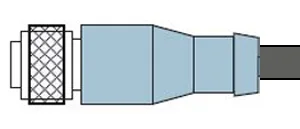
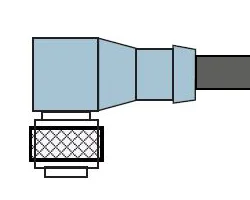
Cables and accessories
Related products
Similar products
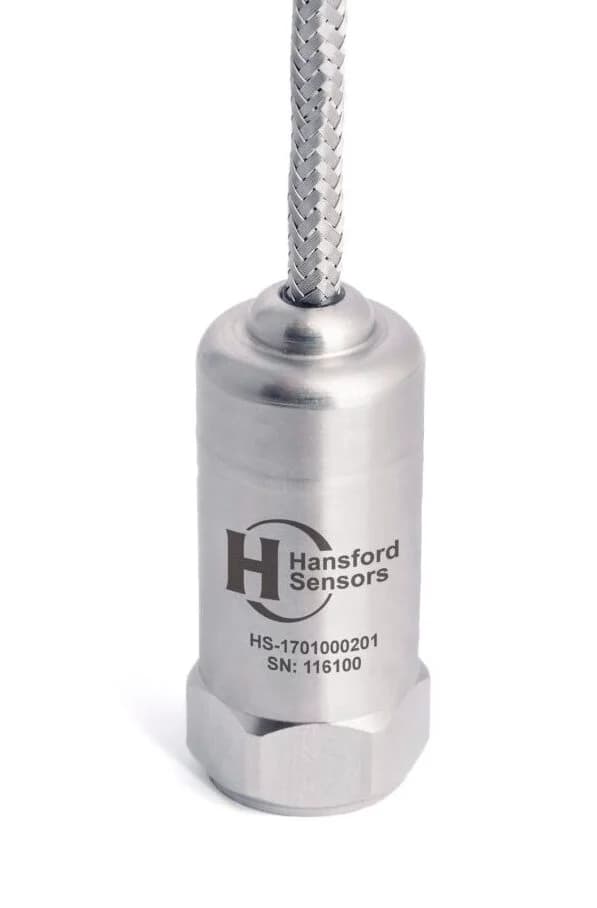
HS-170 Compact accelerometer, top exit, braided cable
- AC IEPE
- 10 … 500 mV/g
- Top exit
- IP65
PDF datasheet
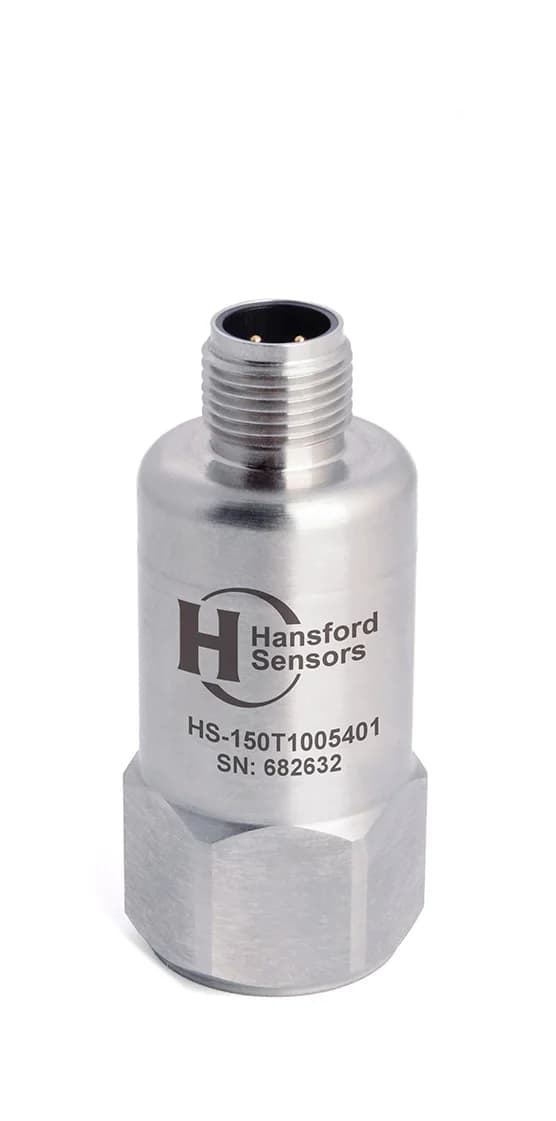
HS-150T Accelerometer with temperature output, top exit, M12 connector
- AC IEPE + 10 mV/°C
- 10 … 500 mV/g
- Top exit
- IP67
PDF datasheet
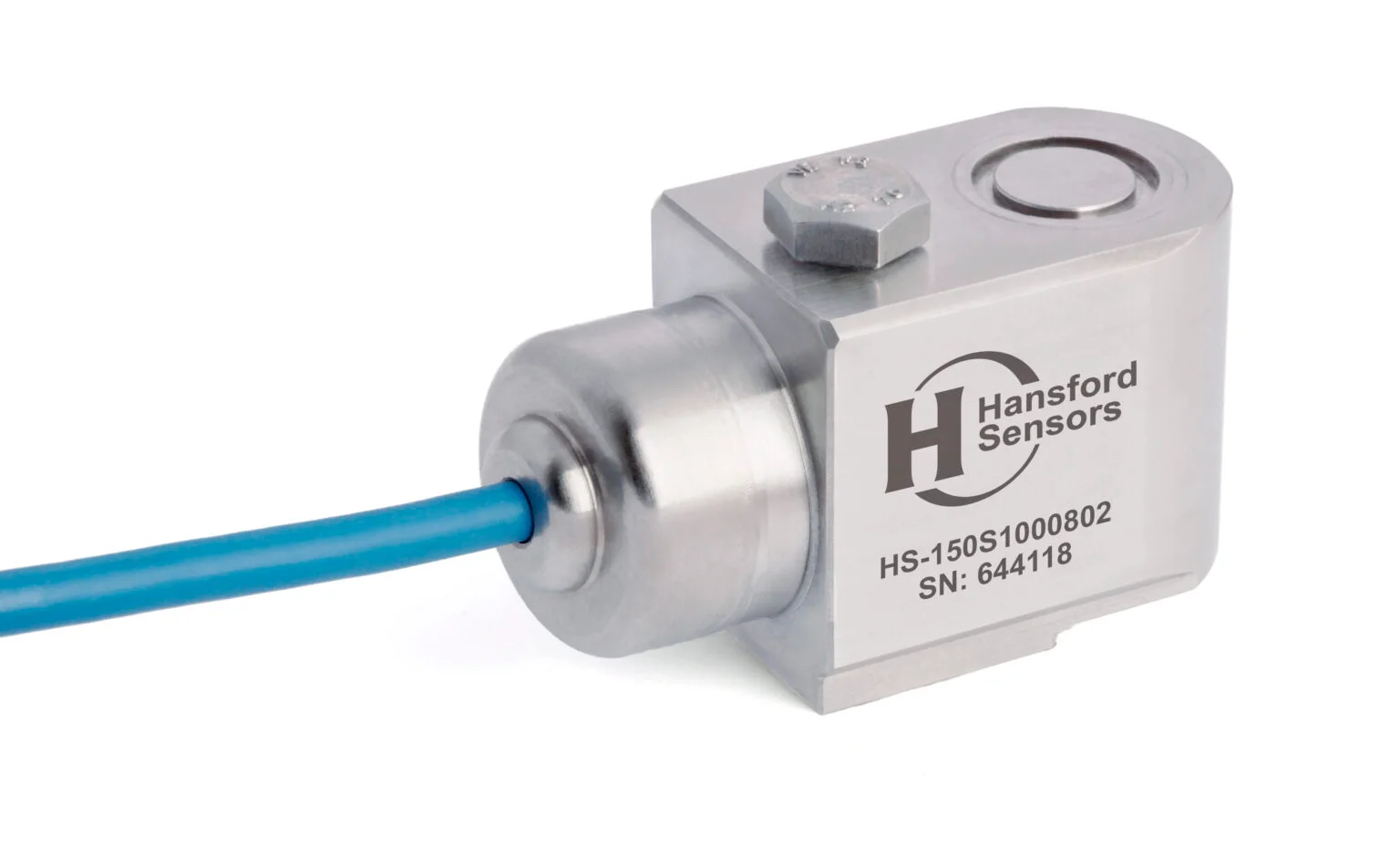
HS-150S Industrial AC accelerometer, side exit, flame-retardant FR cable
- AC IEPE
- 10 … 500 mV/g
- Side exit
- IP65
PDF datasheet
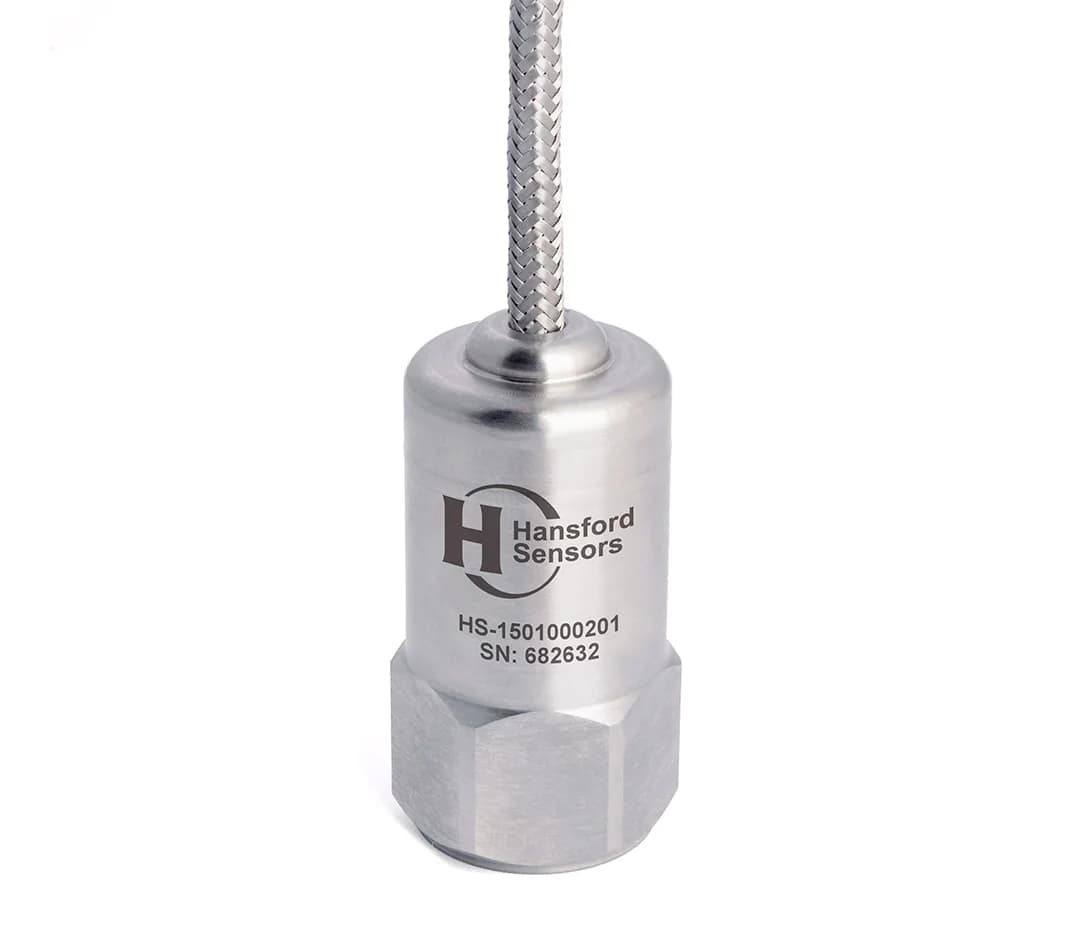
HS-150 Industrial AC accelerometer, top exit, braided cable
- AC IEPE
- 100 mV/g
- Top exit
- Braided cable
PDF datasheet
Guides
- How to choose a vibration sensor for your machineChoosing a vibration sensor starts with the question of where the signal will go. Step by step, we cover the output type, measured quantity, sensitivity, frequency range, operating conditions, connection type, mounting and number of axes — with a checklist at the end.
- IEPE accelerometer or 4–20 mA transmitter? A comparisonAn IEPE accelerometer delivers the full vibration signal for analysis, while a 4–20 mA transmitter delivers a single overall value to the PLC. We explain how both types work, how they differ and when a dual-output sensor is worth using.
- Vibration velocity or acceleration — what should you measure?Displacement, velocity and acceleration describe the same motion, but each of them emphasises a different frequency range. We explain when to measure velocity in mm/s RMS, when acceleration in g and the envelope, and when displacement.